Reviewed for accuracy by Ryan I. Adams, Quality Assurance Technical Field Trainer, Bug House Pest Control — August 2026
Quick answer: Gnat bites and mosquito bites look similar but differ in key ways. Gnat bites tend to appear in clusters, bleed slightly, and cause intense localized pain or itching at the site. Mosquito bites typically appear as single raised welts that itch broadly and develop within minutes. Location on the body, timing, and bite pattern help identify which insect is responsible.
You swat at something small, feel a sharp sting, and wake up the next morning with red, itchy spots you cannot explain. Was it a mosquito? A gnat? Something else entirely?
Most people assume mosquitoes are the culprit by default. But in Georgia, gnats, particularly biting gnats known as black flies or buffalo gnats, are a genuine and often underestimated nuisance. The two insects leave different marks, cause different reactions, and require different responses. Knowing which one bit you changes how you treat the bite, where you look for the source, and what you do to prevent it from happening again. This guide breaks down the differences, walks through how to treat each, and covers what Georgia residents need to know about both pests. As always, when a reaction is severe or spreading, it is best to consult your medical provider.
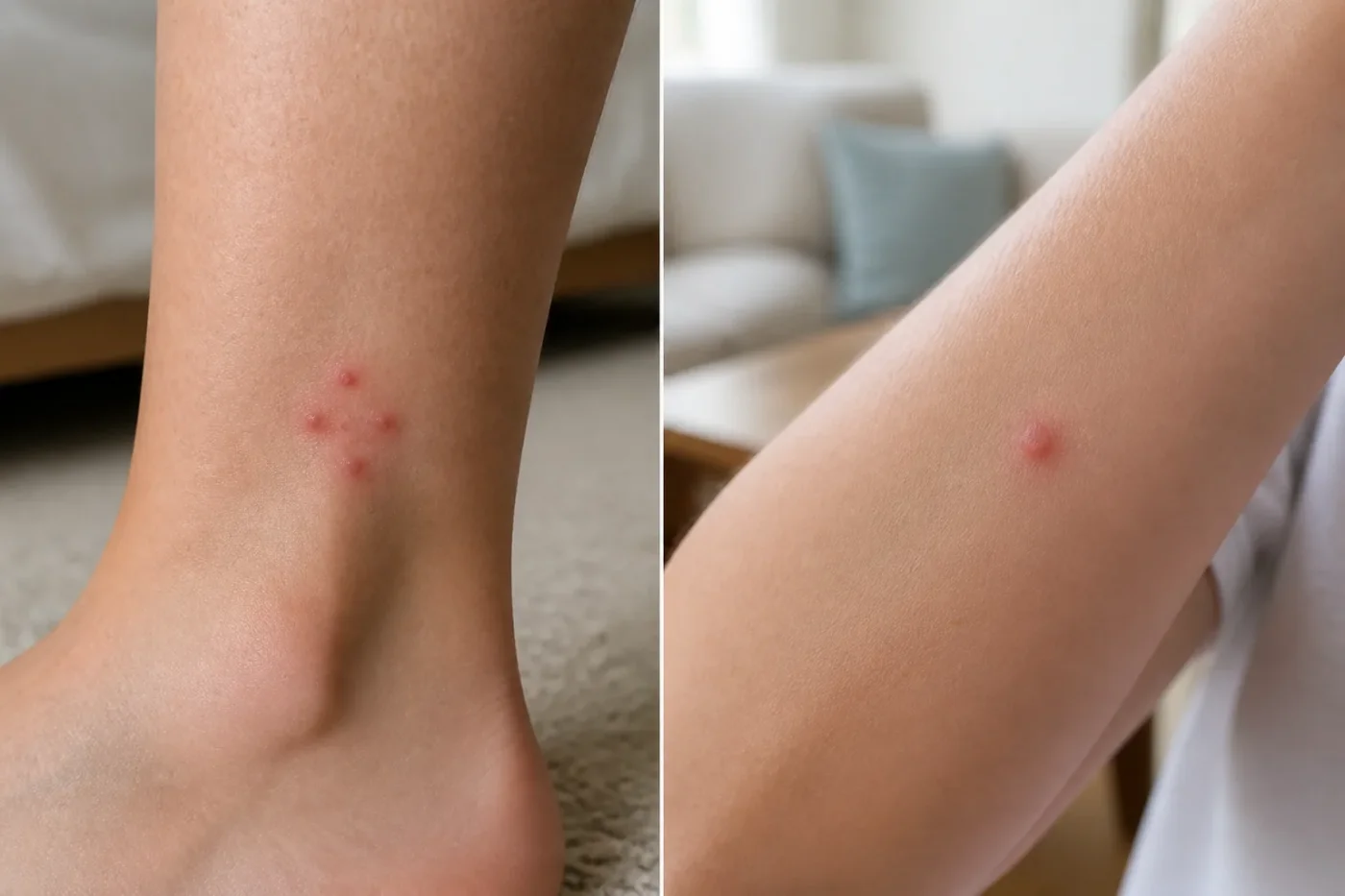
Yes, gnats bite, though not all species do. The term “gnat” covers a broad range of small flying insects. In Georgia, the species most likely to bite people are biting midges (sometimes called no-see-ums), black flies, and eye gnats. These are distinct from the fungus gnats that hover around houseplants, which do not bite at all.
Biting gnats are small enough to pass through standard window screens, and their bites are often felt before the insect is ever seen. That combination of tiny size and immediate, sharp reaction is one of the clearest early signs that gnats, not mosquitoes, are responsible.
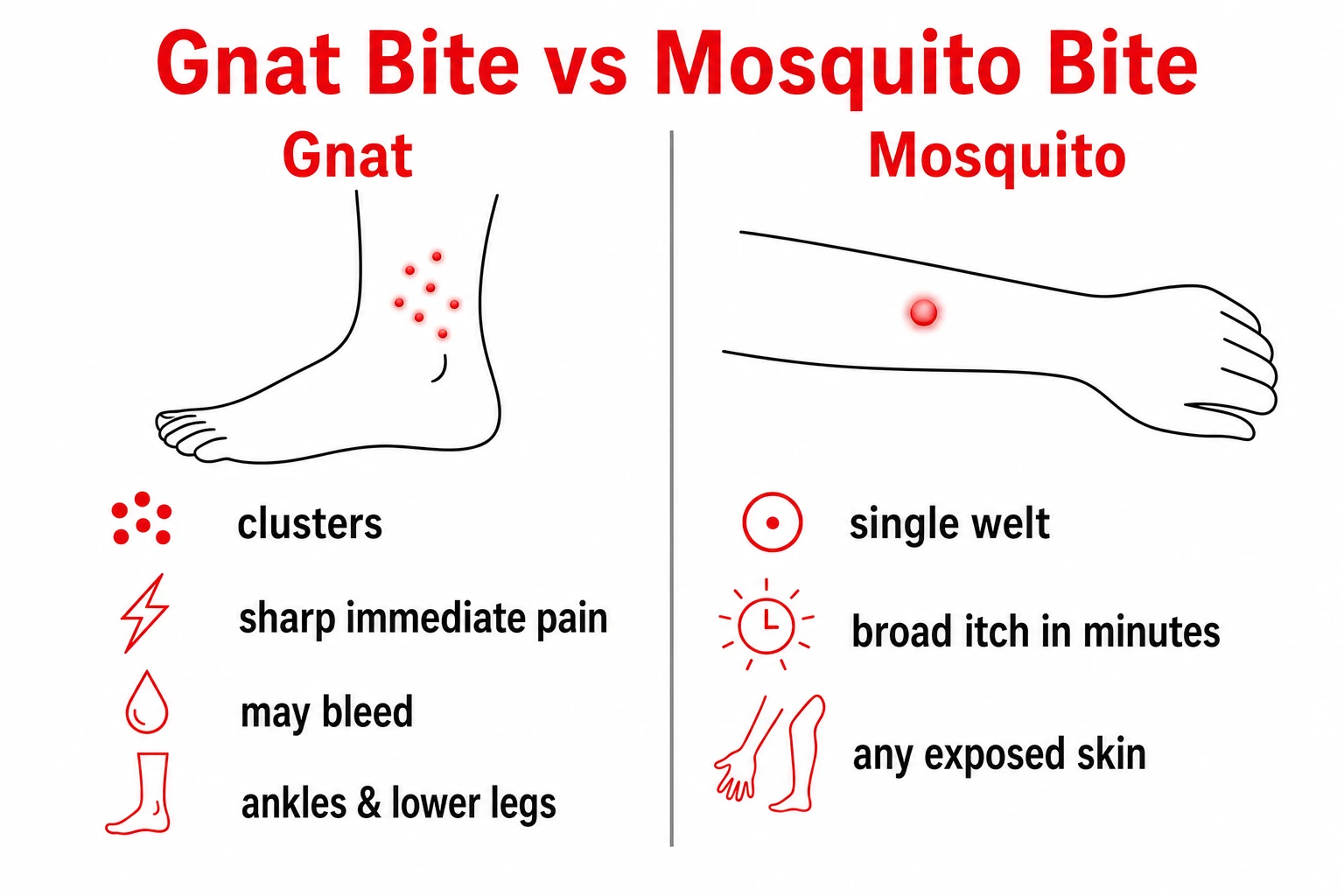
Gnat bites have several characteristics that distinguish them from mosquito bites once you know what to look for.
Mosquito bites follow a more predictable pattern that most people recognize from experience.
| Feature | Gnat Bite | Mosquito Bite |
|---|---|---|
| Appearance | Small red spot, may bleed; can blister | Raised rounded welt, pale pink or red |
| Bite pattern | Clustered, multiple bites in one area | Isolated, spread across different areas |
| Initial sensation | Sharp, immediate pain | Mild sting; itch develops within minutes |
| Itch type | Intense, localized, slow to subside | Broad, immediate histamine response |
| Common locations | Ankles, lower legs, face, neck | Arms, legs, any exposed skin |
| Peak activity | Dawn, dusk, some daytime in shade | Dawn and dusk (varies by species) |
| Bite duration | Days to over a week with scratching | Usually resolves in three to four days |
The treatment approach is similar for both, with a few differences worth noting.
For immediate relief, wash the bite area with soap and water, apply a cold compress for 10-minute intervals to reduce swelling and numb the area, and avoid scratching, which breaks skin, increases infection risk, and prolongs inflammation.
For itching and inflammation, over-the-counter antihistamine creams such as diphenhydramine (Benadryl) reduce the histamine response that causes itching. Oral antihistamines like loratadine (Claritin) or cetirizine (Zyrtec) are useful when multiple bites are involved, and hydrocortisone cream can reduce localized inflammation at the bite site.
For gnat bites specifically, the reaction tends to cause more localized pain than mosquito bites and may persist longer. If a bite site blisters, do not break the blister intentionally. Keep the area clean and covered to reduce infection risk.
Seek medical attention if a bite becomes increasingly red, warm, swollen beyond the immediate bite area, or shows any streaking, which can indicate a secondary infection. Symptoms including fever, headache, body aches, or neurological changes following mosquito bites in Georgia should be evaluated promptly, as mosquitoes in the state can carry West Nile virus and Eastern Equine Encephalitis (EEE).
“One of the most common mistakes people make is scratching gnat bites until they break the skin, and then they end up dealing with a skin infection on top of the original bite. Cold compress, antihistamine, and leave it alone. That is the right call every time.”
A Bug House service professional in Georgia

Treating bites after the fact addresses the symptom. Reducing the mosquito and gnat population on your property addresses the cause.
For personal protection, use EPA-registered repellents containing DEET, picaridin, or oil of lemon eucalyptus on exposed skin, and wear loose-fitting, light-colored clothing that covers ankles and wrists during peak activity hours.
At the property level, eliminate standing water to cut off mosquito breeding sites, since even half an inch of water is enough for a breeding cycle to begin. Improve drainage in overwatered lawn areas and garden beds, which support both gnat and mosquito breeding, and trim vegetation and keep grass cut to reduce resting habitat for adult mosquitoes.
For persistent pest pressure, property-level habits alone may not be enough. Professional mosquito barrier treatments target adult mosquitoes in the shaded vegetation and perimeter areas where they rest during the day. Applied on a scheduled basis, these treatments reduce the active population around your home across the full season rather than addressing individual biting events after the fact. Learn more about Bug House mosquito treatments available across Georgia.
Georgia’s warm, humid climate supports both mosquitoes and biting gnats through a significant portion of the year. Residents in Augusta, Macon, Athens, Warner Robins, and surrounding areas typically see active populations from early spring through late fall, with peak pressure during the summer months.
Mosquitoes are present statewide, but two species dominate in Georgia’s suburban areas: the Asian tiger mosquito and the Southern house mosquito. The Asian tiger mosquito is particularly aggressive, biting during the day and targeting exposed skin wherever it can reach. Biting gnats, including no-see-ums and black flies, are most common near moving water, wooded areas, and properties with consistently moist soil. In Middle and South Georgia, where humidity stays high and drainage is often poor, gnat pressure can be significant through late summer and into fall.
According to the Centers for Disease Control and Prevention, mosquitoes in Georgia can transmit West Nile virus and EEE, making bite prevention more than a comfort issue. Understanding which pest is responsible helps homeowners respond appropriately, both to the bite and to the conditions driving it.
“In Georgia, we deal with both. Customers often do not realize gnats are biting them until they see the clusters on their legs. The pattern is the giveaway. Mosquitoes spread out. Gnats pile on in one spot.”
A Bug House service professional in Georgia
If mosquitoes or biting gnats are a consistent problem on your property, professional treatment is the most reliable path to meaningful, sustained relief.
August 13, 2026
December 31, 2025
December 17, 2025
December 3, 2025