Reviewed for accuracy by Anna Vaccaro, Editorial Lead — Pest Education — August 2026
Quick answer: The most reliable ways to keep mosquitoes and gnats away from your Georgia home are eliminating standing water, improving yard drainage, maintaining vegetation, and scheduling professional barrier treatments. Combining these property-level habits with EPA-registered repellents gives you the strongest protection across Georgia’s long pest season.
Mosquitoes do not wait for an invitation. Neither do gnats. Both pests show up when your yard quietly offers them exactly what they need, water, moisture, organic matter, and shelter, and Georgia’s warm, humid climate means those conditions arrive early and linger late.
Georgia’s mosquito season typically runs from March through October, but in South Georgia, activity can push well into the cooler months during mild winters. That extended window makes casual, reactive pest control far less effective than most homeowners expect. By the time you notice the problem, the breeding cycle is already well underway. This guide pulls together what Bug House service professionals see on the ground every season, from Augusta backyards to Macon neighborhoods, into a practical, property-focused plan.
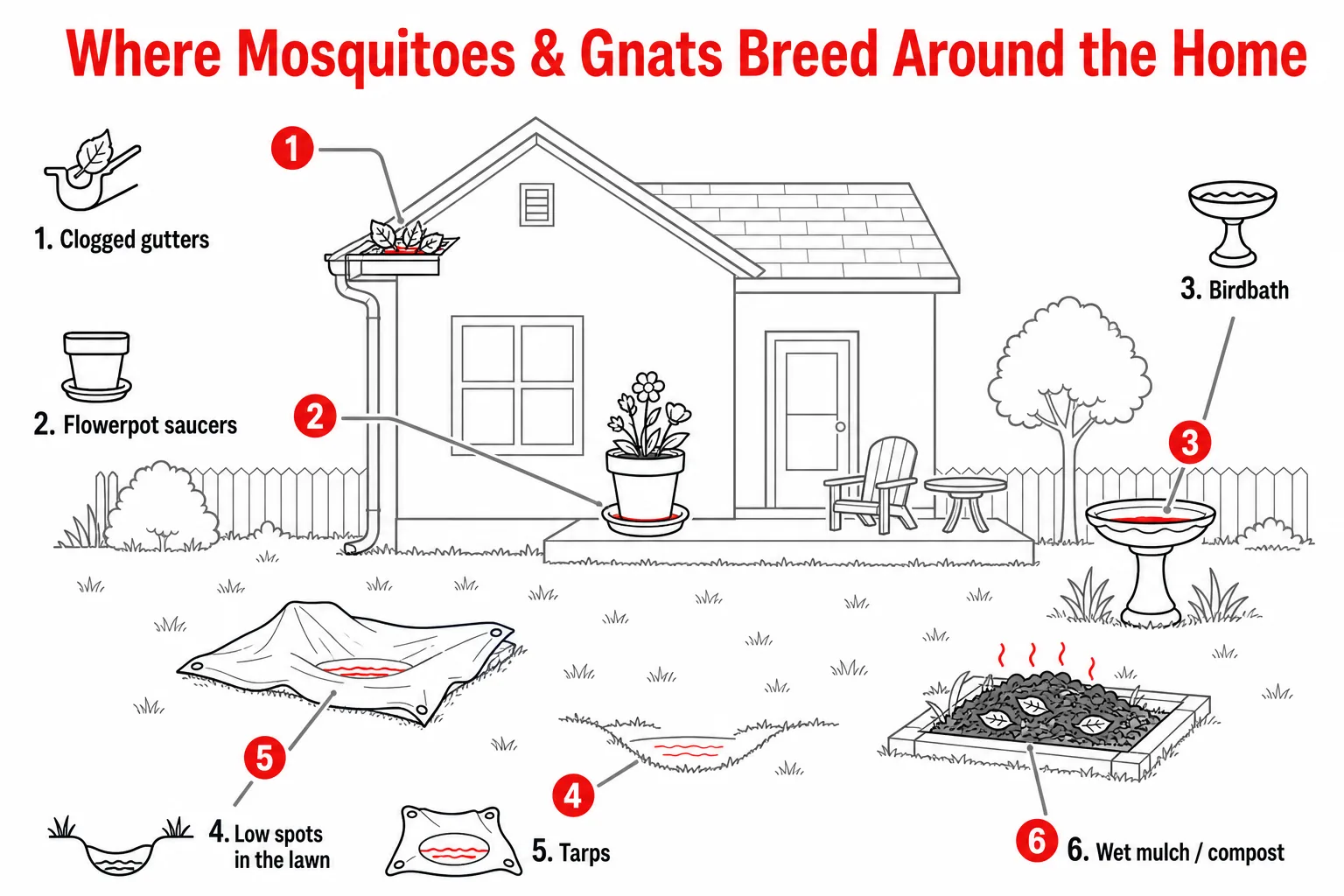
If you only do one thing to reduce mosquito pressure around your home, eliminate standing water. A mosquito needs roughly half an inch of standing water to complete its breeding cycle. Georgia’s frequent summer rain makes it easy to meet that threshold without noticing. A clogged gutter, a flowerpot saucer, a low spot in the lawn, each one is a potential breeding site capable of producing hundreds of new mosquitoes within two weeks.
According to UGA Extension, Georgia is home to more than 60 mosquito species, many of which complete a full breeding cycle in less than two weeks. That pace means ignoring one small water source for a single week can translate into a measurable spike in the mosquito population around your home. Gnats are a different pest but respond to a similar condition: excess moisture. Overwatered lawns, soggy mulch, and decomposing plant debris create the wet, organically rich environments that fungus gnats and eye gnats depend on for breeding. Addressing moisture and drainage on your property reduces pressure from both pests at once.
Understanding what draws mosquitoes and gnats to your property makes prevention more targeted and more effective.
Adult mosquitoes locate targets using carbon dioxide from exhaled breath, which they can detect from up to 35 feet away. Body heat, moisture from perspiration, and certain skin compounds, including lactic acid and ammonia, amplify that signal at close range. Once they are in the yard, they need standing water to breed and dense vegetation to rest in during the heat of the day. Common standing water sources that Georgia homeowners frequently overlook include:
The Asian tiger mosquito (Aedes albopictus) is particularly prevalent in Georgia’s suburban neighborhoods. Unlike many species, it bites during the day and actively seeks shaded, cluttered outdoor spaces, including leaf piles, dense plantings, and the areas around decks and porches. Yards that offer both shade and standing water are especially attractive to this species.
Gnats target a different set of conditions, but often overlap with mosquitoes in the same environments: consistently moist or overwatered soil, mulch that stays wet between waterings, decaying plant material left on the ground, compost piles without proper management, and organic debris accumulating under shrubs or in low-lying areas. Fungus gnats breed in the top layer of soil where organic matter is decomposing. Eye gnats, more common in open outdoor areas, breed in loose or sandy soil and are drawn to secretions from the face and skin. Both thrive when drainage is poor and moisture levels stay consistently high.
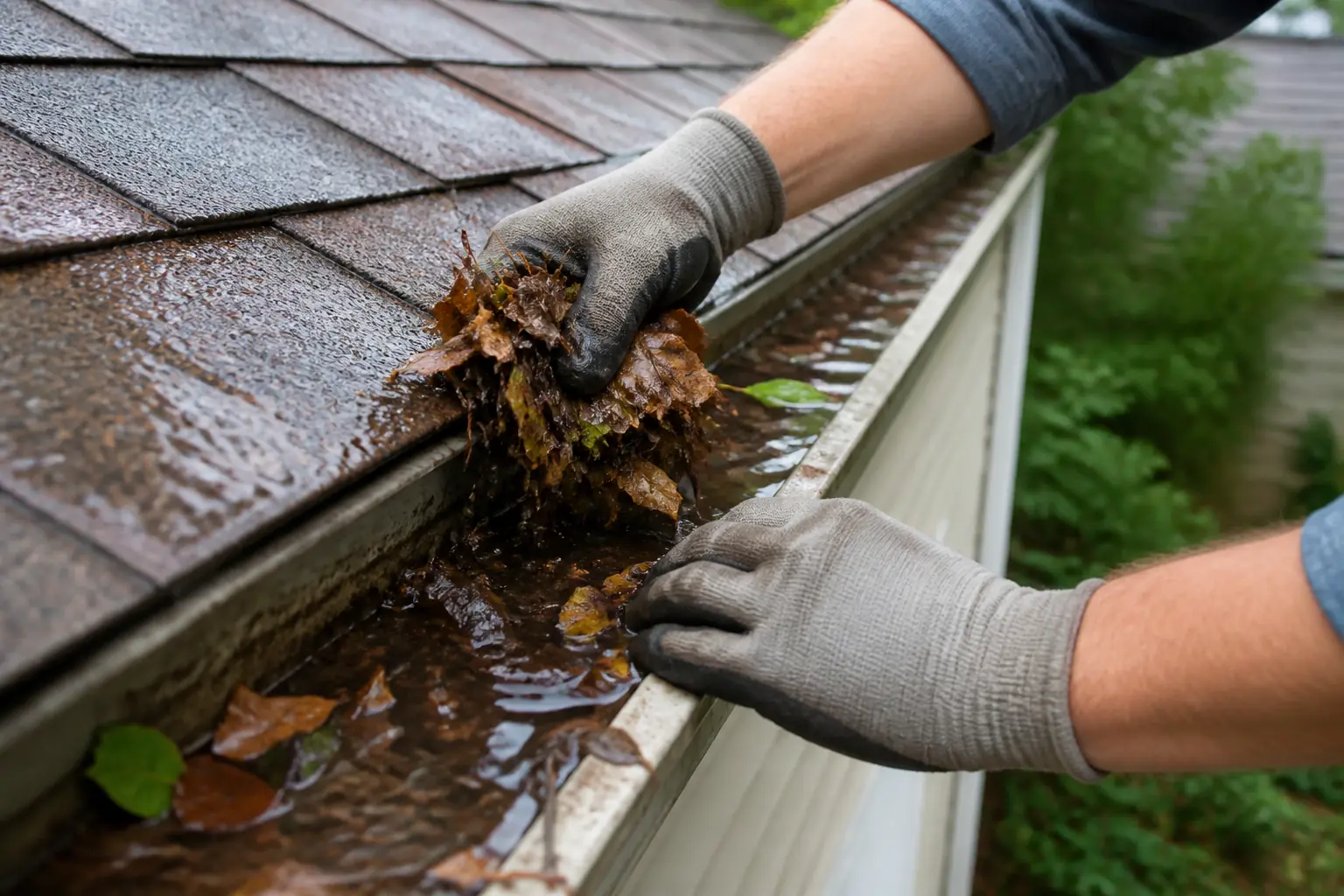
Removing attractants is the foundation. Building habits that maintain those improvements across the season is what makes the difference over time.
Property-level prevention reduces the overall population. Personal protection measures reduce exposure when you are actually outdoors.
EPA-registered repellents are the most reliable option for personal use. Products containing DEET, picaridin, or oil of lemon eucalyptus are among those recognized by the CDC as effective against mosquitoes. Apply them according to label directions, particularly during peak biting hours in the morning and evening. For patio and deck areas, oscillating fans reduce mosquito activity by dispersing the carbon dioxide plume that draws them in. Citronella candles and torches offer some deterrence at close range, though their effectiveness drops off quickly with any breeze. Outdoor clothing choices also matter: light-colored, loose-fitting garments reduce heat and skin exposure, both of which contribute to mosquito attraction.
Gnats that find their way indoors are usually responding to conditions inside the home rather than drifting in from outside. The most common culprits:
Sticky traps placed near plants or windows can help monitor and reduce adult gnat populations indoors, but they work best alongside the habitat changes above rather than as a standalone fix.
Property maintenance reduces breeding opportunities, but it does not eliminate every source of mosquito pressure, particularly when breeding is happening on neighboring properties, in nearby drainage corridors, or in natural water features. Professional barrier treatments target the areas where adult mosquitoes rest during the day, including shrubs, leaf litter, and perimeter vegetation. Applied on a scheduled basis, these treatments reduce the active population around your home across the full season rather than addressing individual biting events after the fact.
“We always tell customers that waiting until the problem is obvious means you are already behind. The best results come from consistent, scheduled treatments starting early in the season and maintained through the year.”
A Bug House service professional in Georgia
Bug House provides mosquito treatments year-round across Georgia. Mosquito pressure does not always follow a predictable calendar, especially in South Georgia and during mild winters when activity can extend well beyond October.
Georgia’s climate is consistently favorable for mosquitoes across much of the year. Warm temperatures, high humidity, frequent summer rain, and a landscape that includes wetlands, retention ponds, and drainage corridors all support populations that can build quickly when conditions are right.
In North Georgia and the Atlanta metro area, suburban density creates localized breeding pressure even in relatively dry conditions. A single neglected gutter or flowerpot near a home can sustain a breeding cycle close to the house throughout the season. In Middle Georgia, including neighborhoods in and around Macon, the combination of heat, humidity, and proximity to water features extends both the intensity and duration of mosquito pressure. Yards with active irrigation systems, ornamental ponds, or connections to natural drainage channels are particularly vulnerable and benefit most from consistent, scheduled treatment. In South Georgia, warm winters mean mosquito activity can persist year-round in some areas.
“What we see in the field across Georgia is that the season keeps getting longer. South Georgia customers especially, they cannot afford to think of mosquito control as a summer-only thing.”
A Bug House service professional in Georgia
Bug House service professionals are based in the communities they serve. The treatments they recommend reflect what is actually driving pest populations in each region, not a one-size-fits-all approach applied from elsewhere.
You have put in the work. Now let Bug House handle the rest. Get a mosquito and gnat quote, no commitment required, just a straightforward assessment of what your property needs.
August 13, 2026
December 31, 2025
December 17, 2025
December 3, 2025