Reviewed for accuracy by Ryan I. Adams, Quality Assurance Technical Field Trainer, Bug House Pest Control — August 2026
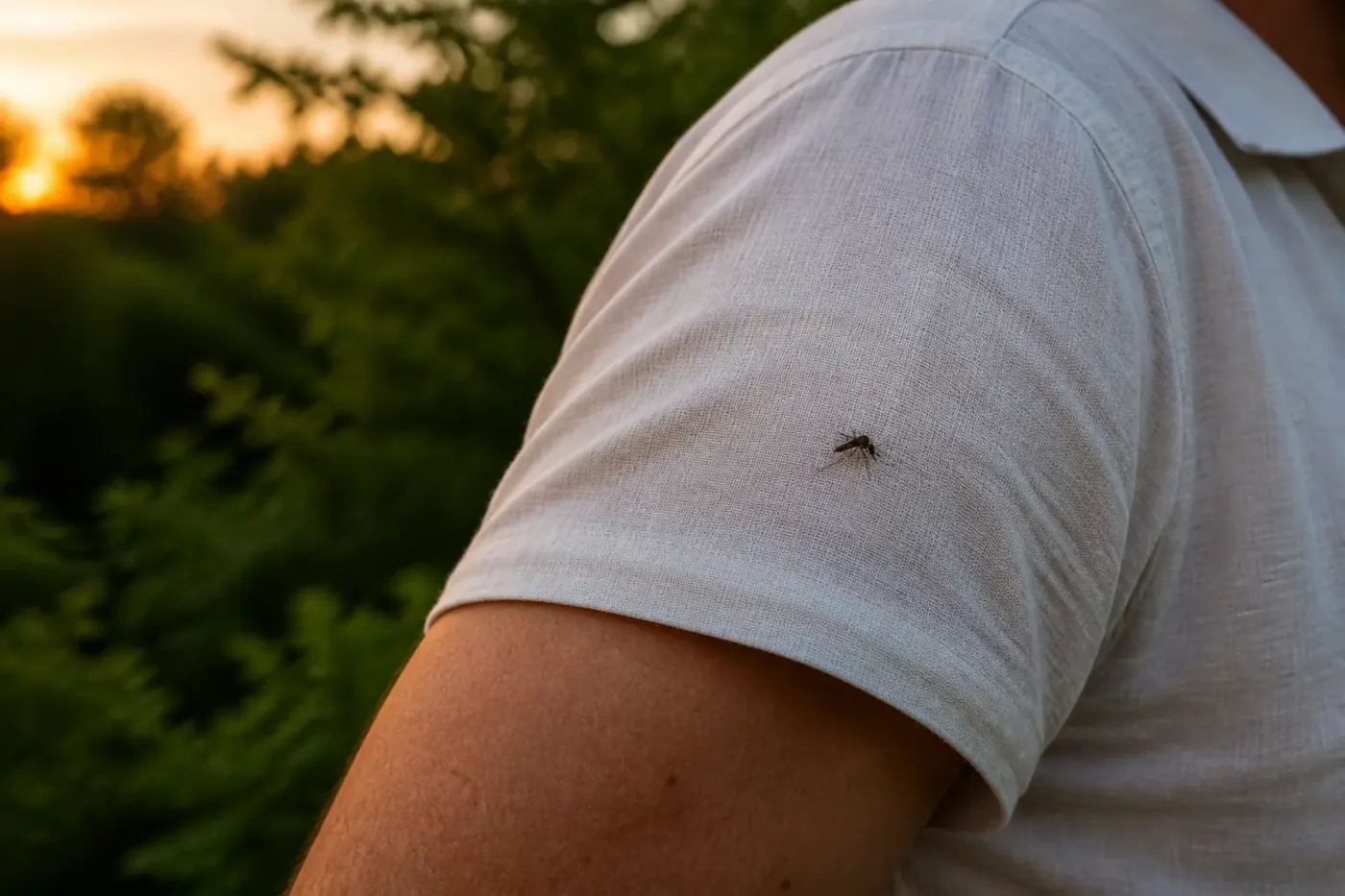
Quick answer: Yes, mosquitoes can bite through clothing, but only certain types. Thin, tight-fitting fabrics like leggings or fitted cotton offer little protection. Thick, loose-woven materials like denim, canvas, or oversized linen make it nearly impossible for a mosquito’s proboscis to reach skin. Fabric type, fit, and color all influence bite risk.
You already know mosquitoes are a problem outside. What surprises most people is that covering up does not always help as much as they expect. A long sleeve shirt feels like a reasonable line of defense, until you come inside with bites on your forearms anyway.
So what actually stops a mosquito? The answer comes down to how mosquitoes bite in the first place, and which fabrics genuinely get in the way. This guide covers the science behind mosquito bites and clothing, how to dress during peak season, repellent strategies that work alongside your wardrobe, and, for Georgia residents, what all of this means when your bite season runs from March through November.
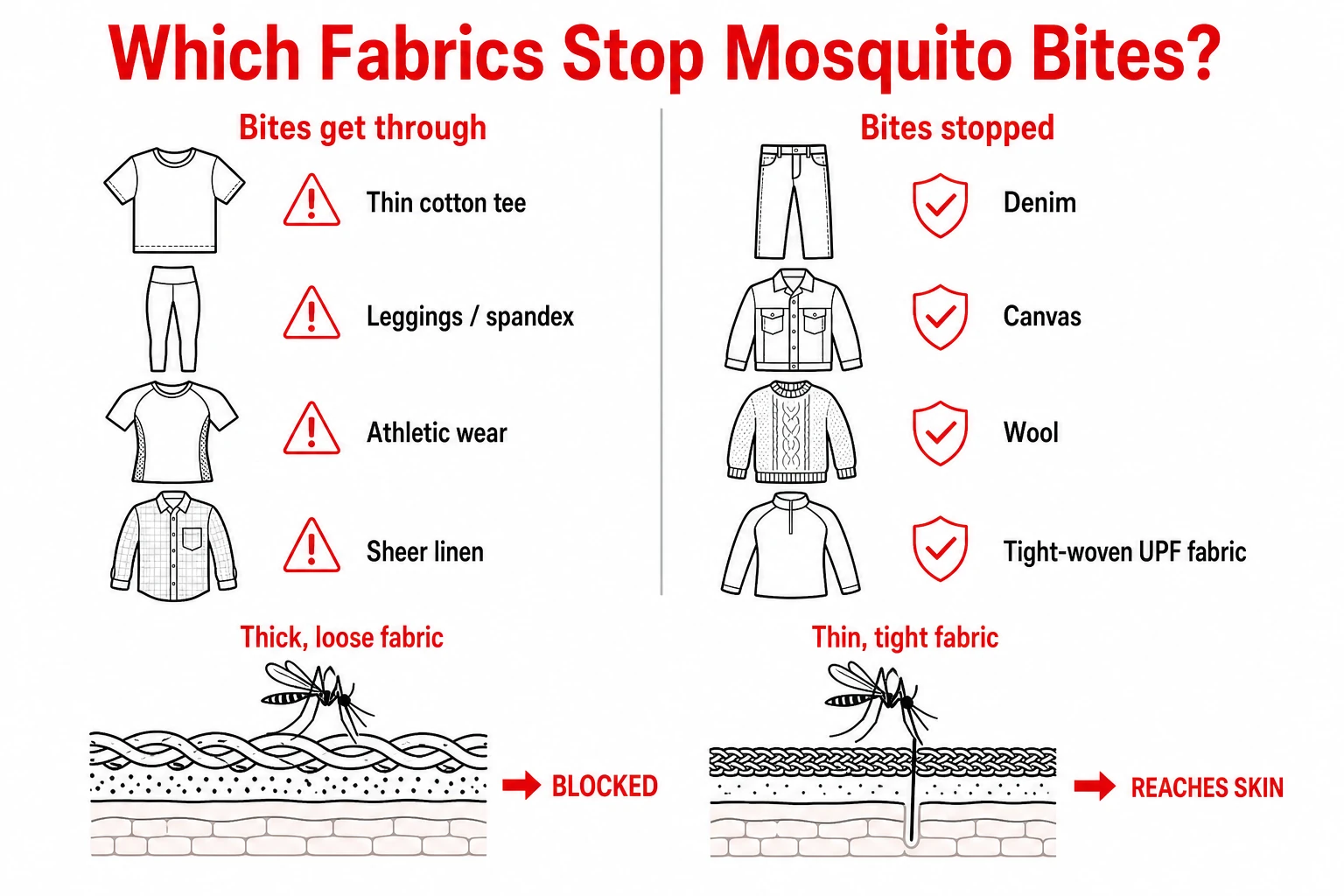
Yes, they can. A mosquito’s mouthpart (called a proboscis) is a thin, flexible needle that can pierce through fabric to reach skin beneath. But its reach is limited, roughly 0.4 mm. That means any fabric with a tight enough weave, enough thickness, or enough give to keep the material off the skin can stop a bite entirely.
The variables that matter most:
Thin fabrics like leggings, fitted athletic wear, or lightweight cotton tees offer almost no protection. Mosquitoes can and do bite through them regularly.
Not all clothing is equal when it comes to mosquito protection. Here is a practical breakdown.
If the fabric is pressed against your skin, assume it offers limited protection regardless of what it is made from.
A word on UPF-rated clothing: garments with a high UPF (Ultraviolet Protection Factor) rating tend to have tighter weave construction, which also makes them more bite-resistant. UPF 50+ garments are worth considering for outdoor activities, especially in wooded or wet environments.
Choosing the right fabric is one part of the equation. How you wear it matters just as much.
Clothing and repellent work better together than either does alone. Here is what the evidence supports.
“We see a lot of customers who have the right idea, long sleeves, long pants, but they skip the repellent and end up bitten anyway. Clothing slows mosquitoes down. Repellent keeps them off entirely. Use both.”
Marcus Tillman, Bug House service professional, Macon, GA
Even with the right clothing and repellent strategy, some bites happen. How you respond matters.
Clothing and repellent protect the individual. They do not address the population of mosquitoes breeding in and around your property. The most effective long-term strategy is reducing mosquito habitat and, where necessary, treating breeding and resting sites professionally.
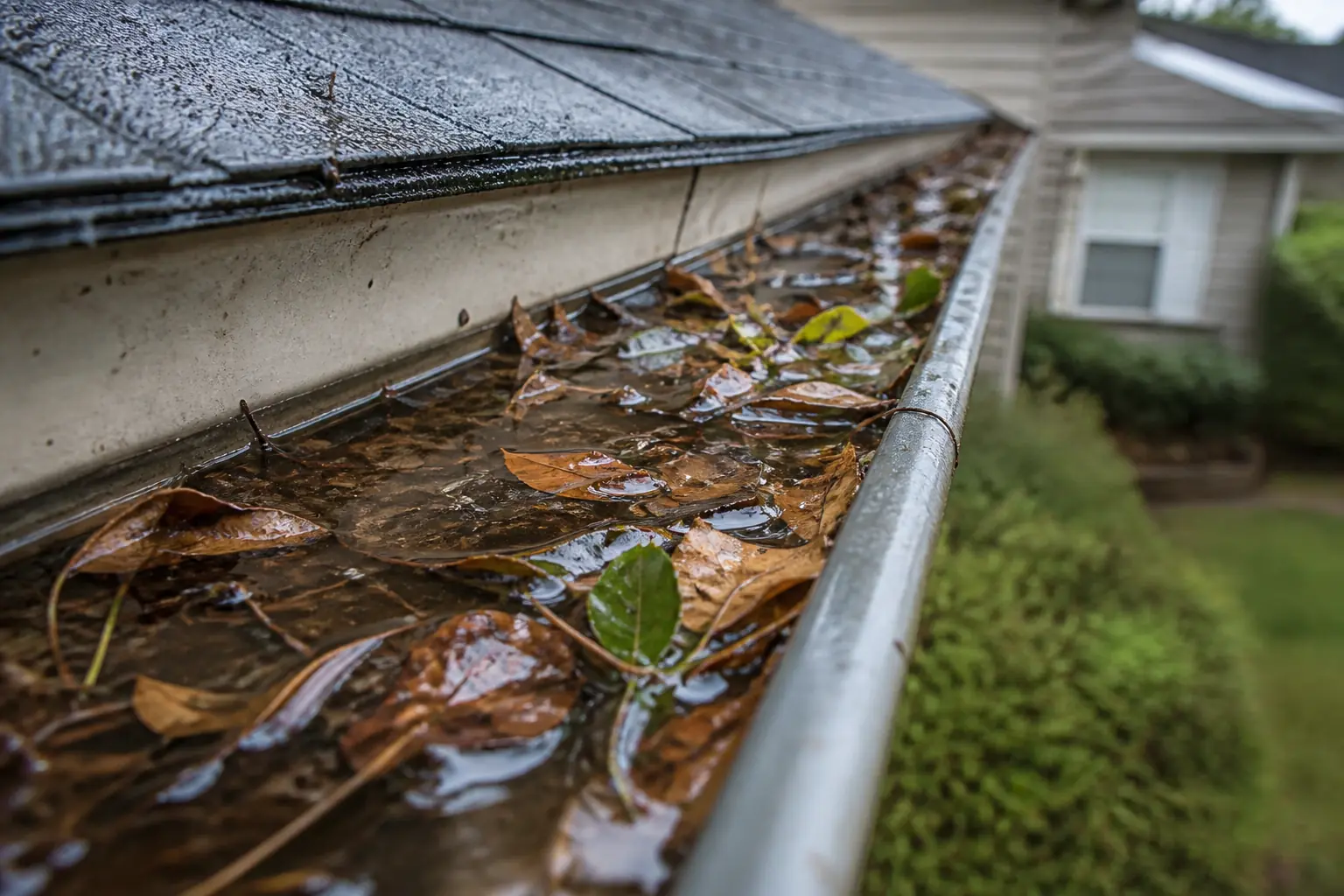
Eliminate standing water. Mosquitoes breed in standing water. Even small amounts, such as a bottle cap, a clogged gutter, or a plant tray, can support a breeding population. Empty, drain, or cover anything that holds water weekly. Common problem areas include gutters and downspouts, birdbaths and decorative fountains, tarps and pool covers, low spots in the yard, and unused containers, tires, or pots.
Modify your yard environment. Dense vegetation, tall grass, and shaded damp areas give mosquitoes a place to rest during daylight hours. Keeping grass trimmed and vegetation managed reduces harborage. According to UGA Extension, diligently eliminating standing water is the critical first step in mosquito prevention around the home.
Consider professional mosquito treatments. For properties where mosquito pressure is consistently high, professional barrier treatments significantly reduce mosquito populations around the perimeter. Bug House offers mosquito treatments across Georgia that target both adults and breeding sites, providing extended protection through peak season.
“Barrier treatments make a real difference for families who spend time in their yards. We treat the resting areas, the shrubs, the shaded spots, the perimeter. It does not eliminate every mosquito, but it brings numbers down enough that people can actually enjoy being outside again.”
Elena Reyes, Bug House service professional, Augusta, GA
Georgia’s climate creates one of the longest and most intense mosquito seasons in the country. Warm temperatures arrive early and linger well into fall. Residents in Athens, Augusta, Macon, Warner Robins, and surrounding areas typically see active mosquito populations from early March through late November, with peak pressure in June through September.
Two species dominate in Georgia: the Asian tiger mosquito (Aedes albopictus) and the Southern house mosquito (Culex quinquefasciatus). Both are aggressive biters. The tiger mosquito is particularly notable because it feeds during daylight hours, which means the standard advice of avoiding outdoor activity at dawn and dusk does not fully apply. For Georgia homeowners, seasonal protection strategies need to begin earlier and extend later than those used in cooler states. Clothing choices, repellent habits, and yard management are relevant for the better part of nine months.
Mosquitoes can bite through clothing, but with the right fabric, fit, repellent, and yard management, you can dramatically reduce your exposure. Loose, thick, tightly woven fabrics stop bites; thin, tight fabrics do not. Use DEET, picaridin, or permethrin-treated clothing for reliable protection. Eliminate standing water and dense vegetation to reduce mosquito populations around your home. And remember that Georgia’s long season means starting protection strategies earlier than you might expect.
If mosquito pressure on your property is high despite your best efforts, professional treatment is the most reliable next step.
August 13, 2026
December 31, 2025
December 17, 2025
December 3, 2025