Ants and flies that appear indoors in winter may be coming from a nest or overwintering insects already inside the structure, such as in a wall void or attic. In other cases, ants may still be entering from outdoors, or flies may be breeding around an indoor source. Warmth can make sheltered insects active. Identifying the pest and finding its source matters: treating only the insects you see may not resolve the problem.
If you see ants in your kitchen in January, the source could be an indoor nest, a colony entering through a gap, or outdoor ants taking advantage of a mild spell. Some ants nest in protected spaces inside a home, including wall voids or areas around plumbing.
Kimberly Costly, Service Manager at Bug House Pest Control in Carrollton, Georgia, says technicians look for trails, entry points, moisture, and other signs to help determine where winter ants are coming from. A heated structure can create sheltered conditions, but a winter ant sighting alone does not prove the nest is inside.
"When we get a call about ants in the kitchen in January, the nest is not always inside the house. It could be in a wall void near a water source, but it could just as easily be outside with workers following a warm gap to get in. We follow the trail, look for moisture, check around plumbing and baseboards, and see where activity is repeating before we draw any conclusions."
Kimberly Costly, Service Manager, Bug House Pest Control, Carrollton
Ant activity depends on the species, the weather, and the colony’s location. Follow the trail when possible and note where and when activity appears. Repeated activity near a warm, damp area or a gap in trim can help an inspector narrow down the source.
Not exactly. Ants do not hibernate like mammals. Some species enter a seasonal period of reduced activity in cold weather, while others may remain active when conditions allow. In Georgia, mild winter days and warm indoor spaces can support activity, so ants may still forage.
That helps explain why ants may disappear during a cold stretch and return during a warmer period. The change in sightings does not by itself tell you whether a colony moved, became less active, or is entering from outdoors.
Wall voids can shelter some ant colonies, especially where there is moisture, food, or access to the outdoors. But not every winter ant sighting means ants are nesting in a wall. A technician looks for trails, entry points, moisture, and other signs before recommending treatment.
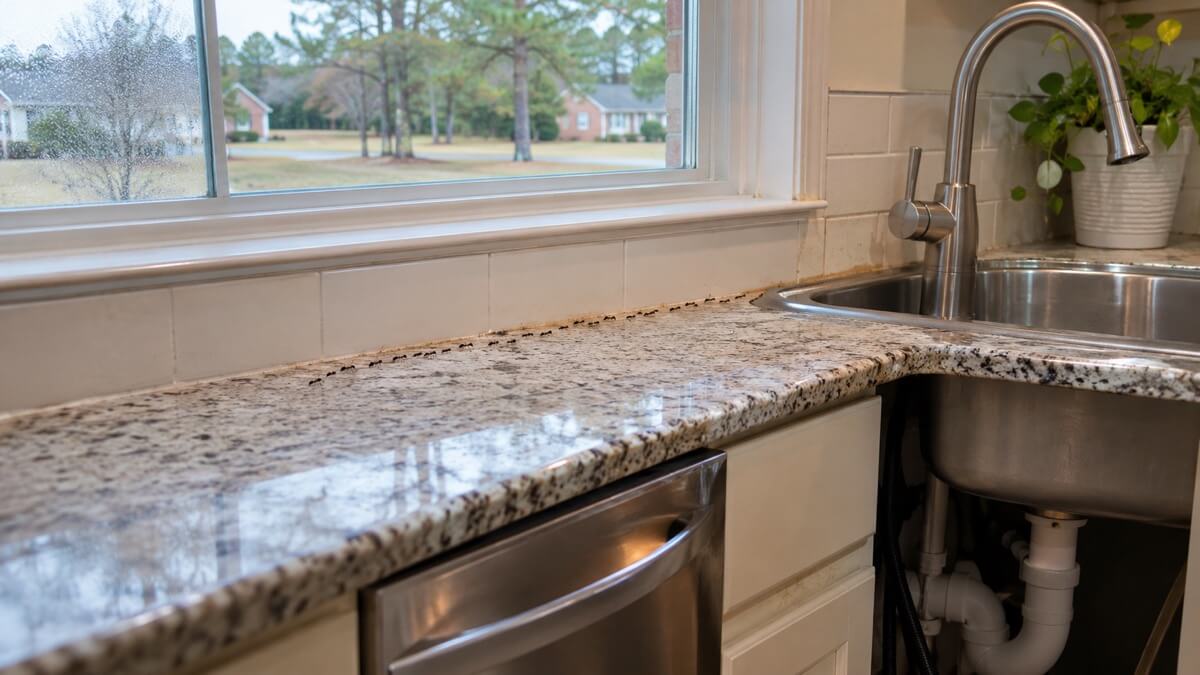
Furnaces, water heaters, and hot water pipes can create warm areas where insects may be noticed. Leaks and condensation can also provide moisture. Finding ants near a pipe does not establish that the colony is inside the wall, but the location can help guide an inspection.
Some ant species can establish satellite colonies, which may make the source harder to identify. Spraying visible ants may kill workers without reaching a nest or addressing the conditions attracting them. Costly says technicians consider the colony’s location and the ant species when deciding how to treat the problem.
"Spraying the ants you see on the counter gives you the satisfaction of doing something, but it rarely solves the problem. You’re killing workers, not the colony. If the nest is inside a wall void or under a slab, those workers will be replaced within days. We need to find where they’re foraging from, what’s drawing them in, and address that, otherwise the same customers are calling us back two weeks later."
Kimberly Costly, Service Manager, Bug House Pest Control, Carrollton
Avoid applying pesticides contrary to the product label or directly into wall voids without professional guidance.
Flies inside during winter may have entered the home in fall and sheltered there, or they may be breeding indoors. The type of fly and where you find it can help distinguish between these possibilities.
Cluster flies are one possible winter fly. Adults may enter a structure in late summer or fall and shelter in attics or wall voids. They can become visible around windows during winter, especially when sheltered areas warm. The University of Maryland Extension’s cluster fly guide explains their overwintering behavior and common hiding places.
"The flies homeowners find crawling on their windows in February are almost always cluster flies. They entered the home back in September or October, found a warm spot in the attic or a wall void, and went dormant. When the sun warms that side of the house on a mild winter day, they think spring has arrived and start moving toward the light. They are not coming from outside at that point, they have been in your home for months."
Kimberly Costly, Service Manager, Bug House Pest Control, Carrollton
Not every winter fly is an overwintering species. Fruit flies are often associated with ripe produce, recycling, or other fermenting material. Drain flies can develop in the organic film inside drains. These flies point to an indoor breeding source, so check food, bins, and drains rather than assuming they came from an attic or wall void.
"Tiny bugs" can describe several different pests, and their size or location alone is not enough to identify them. Note their color and shape, whether they fly, and where they gather. Ants usually travel in visible trails; cluster flies are larger, slow-moving flies; and lady beetles are round beetles that may gather near sunny windows.
If you see orange-and-black beetles, read our guide to overwintering lady beetles for identification and prevention information. A clear photo can also help a pest professional identify an unfamiliar insect.
The right response depends on the insect. If ants are active, clean up food and water, note where they travel, and avoid spraying over bait products. Baits may help with some ants when used exactly as directed, but they may not solve every infestation.
If activity keeps returning, a technician can inspect for trails, entry points, moisture, and possible nesting sites. Treatment should be selected for the identified pest and applied according to its label. For cluster flies, vacuuming visible flies can reduce nuisance activity, while sealing exterior gaps before fall can help reduce future entry. Drain and fruit flies require finding and removing their breeding source.
If you’re dealing with recurring activity, a professional inspection can help identify the pest and determine whether it is nesting indoors, entering from outside, or breeding in an indoor source. Learn more about Georgia pest control and request an inspection.
Seeing insects indoors this winter? Contact Bug House to discuss an inspection and the right next step for the pest you’re seeing.
The best time to reduce fall entry by overwintering insects is before they begin seeking shelter. Seal gaps around utility lines, windows, doors, and attic vents. Repair screens and weatherstripping, and keep vegetation trimmed back from the house. If activity is recurring, consider an inspection before fall temperatures drop.
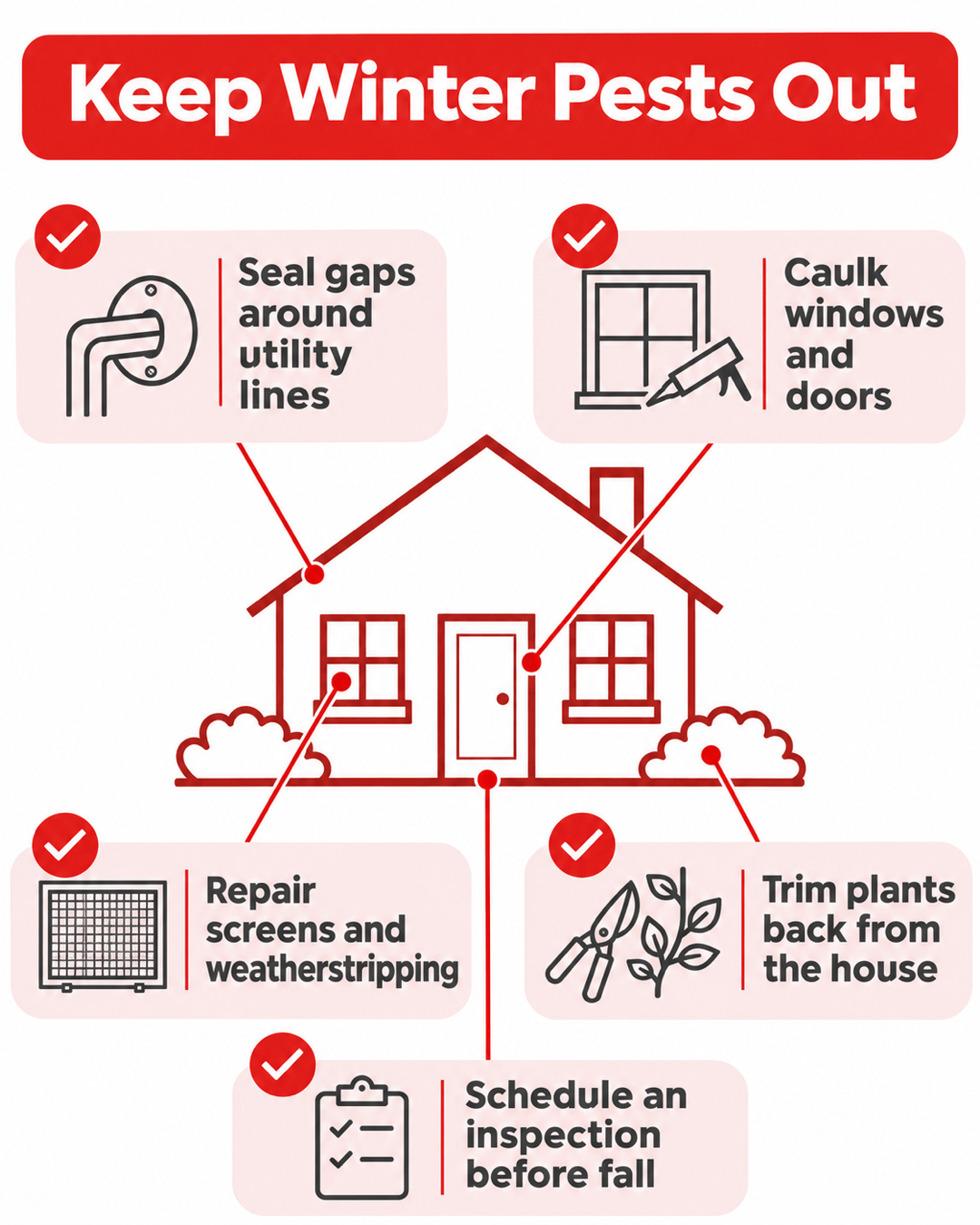
"September is the window most homeowners miss. Before temperatures drop, we’d tell them to walk the exterior and caulk any gap they can see around windows, doors, utility lines, and soffits. Trim back any vegetation touching the house, fix damaged screens, and clear out anything holding moisture close to the foundation. Those steps won’t guarantee zero insects inside, but they take away most of the easy entry points that cluster flies and overwintering ants are looking for. By the time someone calls us in January, that window is already closed."
Kimberly Costly, Service Manager, Bug House Pest Control, Carrollton
For a broader seasonal checklist, see our winter pest prevention guide. For more on food, moisture, and other factors that draw ants indoors, read what attracts ants indoors.
Homeowners in Georgia may notice ants, cluster flies, lady beetles, stink bugs, and other insects indoors during cooler weather. Which pests appear depends on local conditions and the structure. For more possibilities, see our article on bugs in your walls.
Many overwintering insects enter buildings in late summer or fall and shelter in attics or wall voids. Because winter sightings can also come from active ant trails or flies breeding indoors, identify the insect before choosing a control method.
A few ants on the counter in January can have more than one explanation. Look for a trail, check for food and moisture, and avoid assuming the colony is inside a wall until the source is identified. If activity persists, an inspection can help determine what is happening and how to address it.
Prefer to talk? Call Bug House at 866-696-2001.
Ants indoors in winter may be nesting inside the structure, following an outdoor trail during mild weather, or seeking food and moisture indoors. Their species and activity pattern help determine the source.
Ants do not hibernate like mammals. Some species become less active in cold weather, while others may continue foraging when conditions are mild or when food is available indoors.
Cluster flies may enter in fall and shelter in attics or wall voids until warmer conditions bring them out. Fruit flies and drain flies usually point to indoor breeding sources such as produce or drain buildup.
First identify the ant and follow its activity to find the likely source. Baits can work for some species when used as directed, but persistent activity or a suspected wall nest may need a professional inspection and targeted treatment.
Several insects may show up on walls in winter, including ants, cluster flies, and lady beetles. Their appearance and behavior help identify them; not every small insect on a wall is emerging from a void.
Some issues can be reduced with sanitation, vacuuming, or label-directed baiting. Recurring activity, an unknown insect, or suspected nesting inside a wall is a good reason to request a professional inspection.
Reviewed by: Cory Goeltzenleuchter, B.C.E., P.H.E., CP-FS
Cory Goeltzenleuchter is the Director of Technical Services supporting Bug House Pest Control. As a Board Certified Entomologist and Public Health Entomologist, he oversees technical training, service standards, and industry best practices that help Bug House teams deliver science-based service to homeowners across Georgia.
Subject matter expert: Kimberly Costly, Service Manager, Bug House Pest Control – Carrollton
November 12, 2026
August 13, 2026
December 31, 2025
December 17, 2025

