Reviewed for accuracy by Cory Goeltzenleuchter, B.C.E., P.H.E., CP-FS, Director of Technical Services
Quick answer: Ladybugs are small beetles that feed on aphids and other soft-bodied garden pests. Most ladybugs found inside Georgia homes each fall are actually Asian lady beetles, a close relative that moves indoors each fall to overwinter. They do not feed indoors, meaningfully bite, or damage your home’s structure, but they can stain surfaces and cluster in large, frustrating numbers.
If a wave of orange beetles has taken over your windowsills, you are not imagining a pattern. Every fall across middle and east Georgia, ladybugs and their look-alike cousins push into homes by the hundreds, then reappear on the first warm days of late winter. Homeowners in Augusta, Milledgeville, Greensboro, and Dublin see it play out on the same walls year after year.
This guide covers what ladybugs actually are, how to tell an Asian lady beetle from other ladybugs, what they eat (and do not eat) indoors, why they swarm Georgia homes each fall, whether they are harmful, and exactly what to do when they get inside. You will also learn when a curiosity becomes a genuine pest problem worth a professional call.
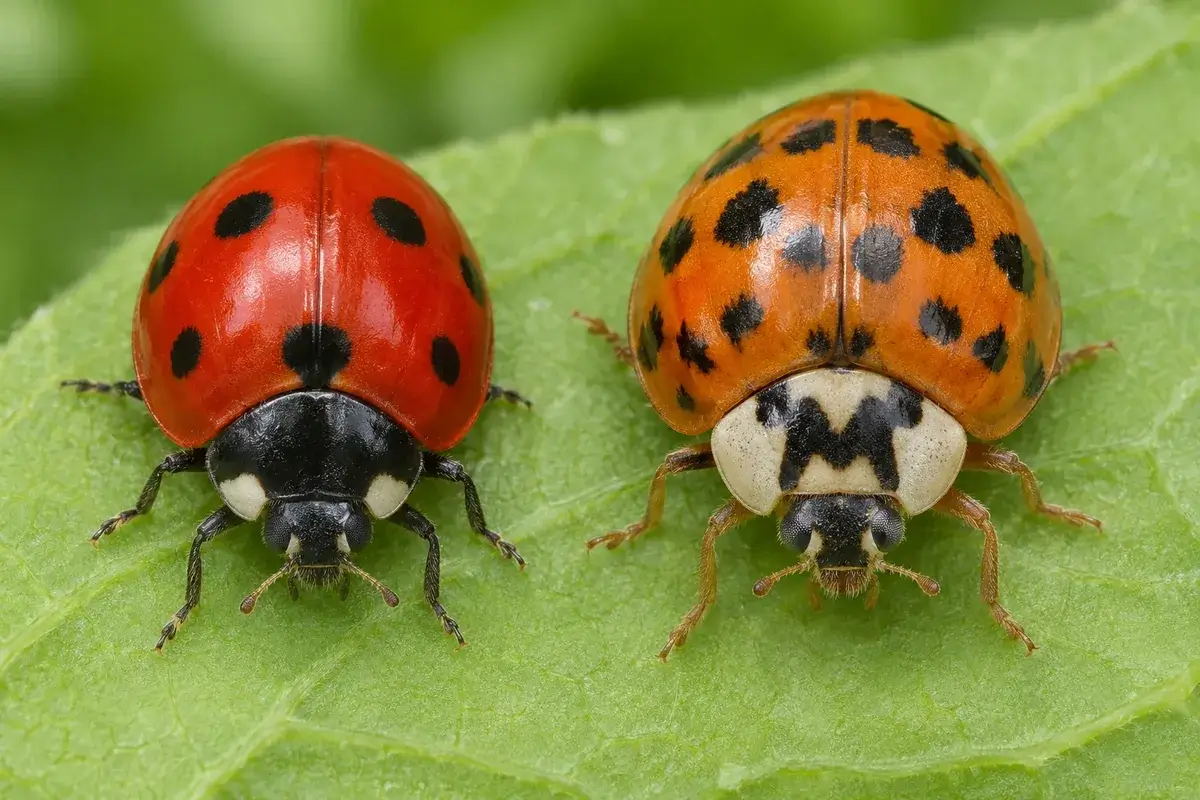
The fastest way to identify what you have is the marking directly behind the head. Asian lady beetles carry a black M or W shaped mark on a whitish pronotum, the plate just behind the head. Most other lady beetles lack it and rarely gather indoors in large numbers.
Both insects are helpful outdoors, so identification is less about good versus bad and more about predicting behavior. If you are seeing dozens on a window, you are almost certainly looking at Asian lady beetles.
| Feature | Other Lady Beetles | Asian Lady Beetle |
|---|---|---|
| Marking behind head | No distinct black M or W marking | Black M or W shaped marking on a whitish pronotum |
| Color range | Usually red or orange, with varied spot patterns | Pale orange to deep red, highly variable |
| Indoor behavior | Rarely enters homes in numbers | Clusters indoors by the dozens or hundreds to overwinter |
| Odor when disturbed | Rarely a problem indoors | Releases a yellow fluid with a distinct, musty odor |
The takeaway: check behind the head first. That one marking tells you whether you are dealing with a garden visitor or a fall home invader.
Ladybugs eat essentially nothing indoors. Outside, they feed on aphids, scale, and mites, but the beetles inside your home are in a dormant overwintering state, not a feeding state. They do not eat food, fabric, wood, or people, which is why they gather near windows and often die on the sill rather than spreading through the kitchen.
This matters for control. Since there is no indoor food source to remove, standard “clean up and bait” advice does not apply. The real fix is exclusion: sealing the gaps beetles use to get in. Understanding this early saves you from wasting effort on remedies aimed at a food source that was never there.
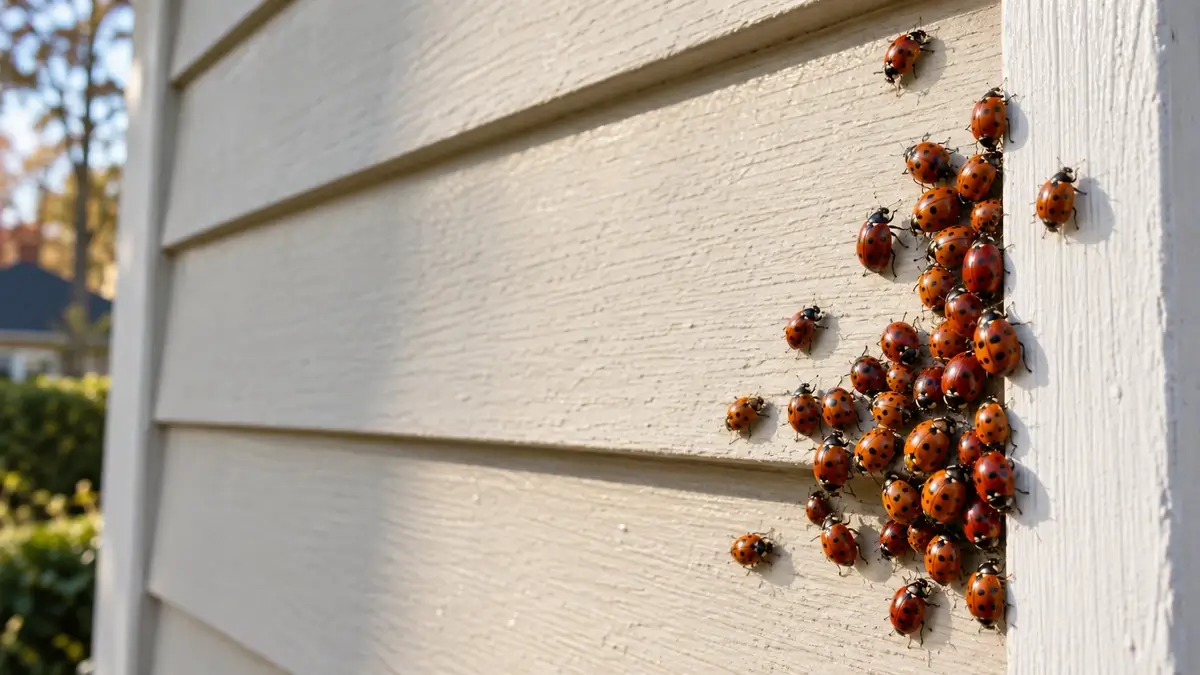
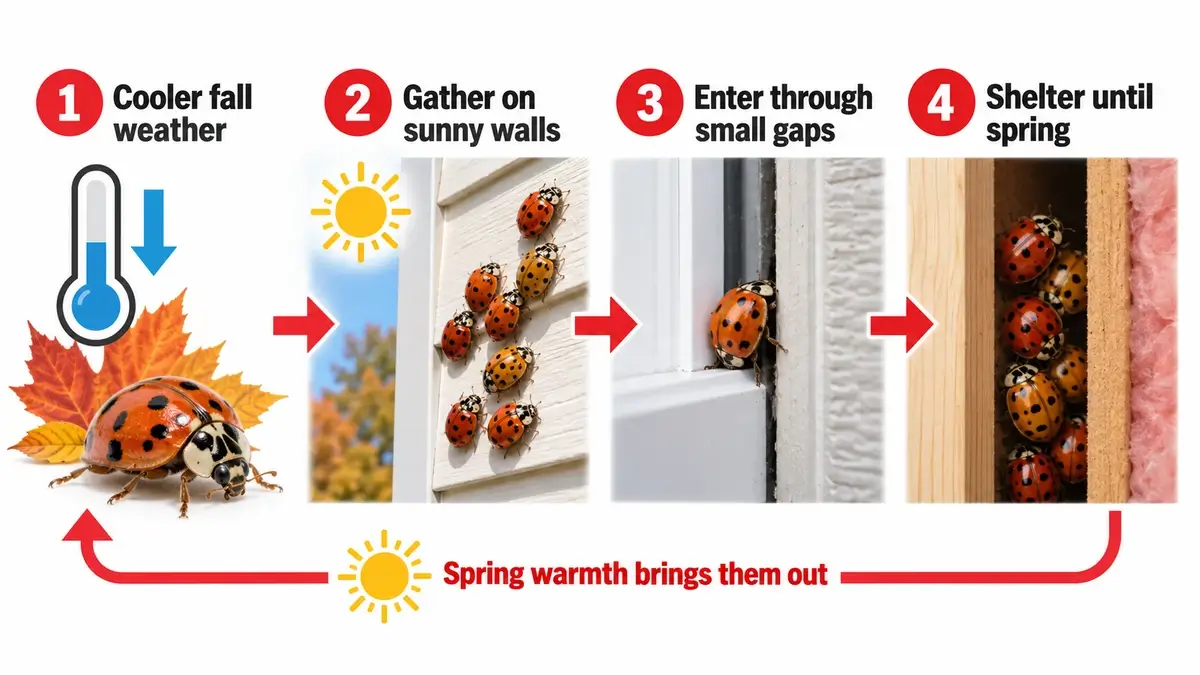
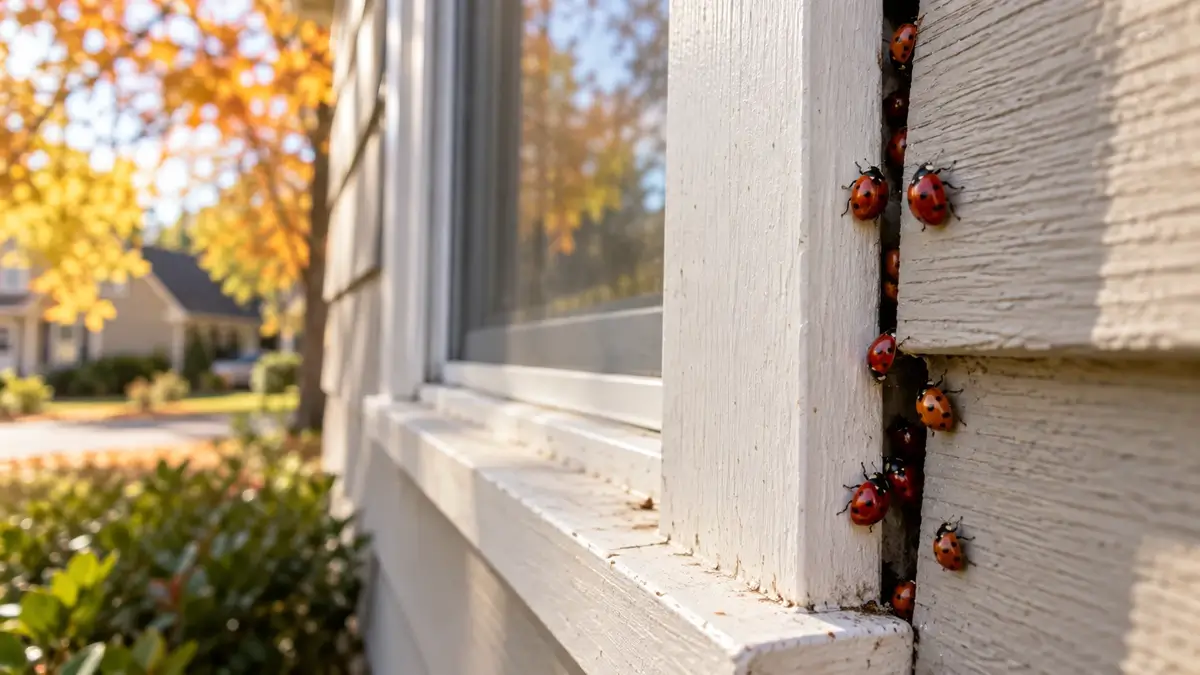
Ladybugs swarm Georgia homes when the first sharp cold snap is followed by a mild, sunny afternoon, typically from mid October through early November. Beetles land on south and west facing walls, light-colored siding, and brick that holds afternoon heat, then push inside through soffit and ridge vents, fascia gaps, window weep holes, worn door sweeps, and unsealed utility penetrations.
The cycle does not end in fall. Beetles that settle into wall voids stay dormant through winter, then wake during warm spells in February and March. When that happens, they move toward interior light and reappear on your windows, which is why many homeowners see a frustrating second wave months after the first.
A quick rule of thumb: if a warm afternoon follows a cold night in October, that is the window beetles use to move in.
Ladybugs are not venomous, do not transmit disease, and do not meaningfully bite, though they can deliver a harmless pinch. Their real nuisance is reflex bleeding: Asian lady beetles release a yellow fluid that stains light walls, curtains, and carpet and leaves a distinct musty odor when the beetles are crushed or disturbed.
Pets are rarely at serious risk. Dogs occasionally mouth a cluster and get temporary mouth irritation, but this usually resolves on its own. People sensitive to large indoor insect populations may notice mild allergy-type symptoms during heavy clustering.
The practical point: the biggest downsides are staining and odor, both of which you can avoid by removing beetles gently rather than crushing them.
If beetles are already indoors, vacuum them up, never crush them, and empty the canister or bag outside immediately to prevent staining and odor. A nylon stocking rubber-banded inside the vacuum wand lets you capture and release the beetles without them ever reaching the dusty canister. Skip foggers and indoor aerosols, which only reach beetles in the open and leave the wall void population untouched.
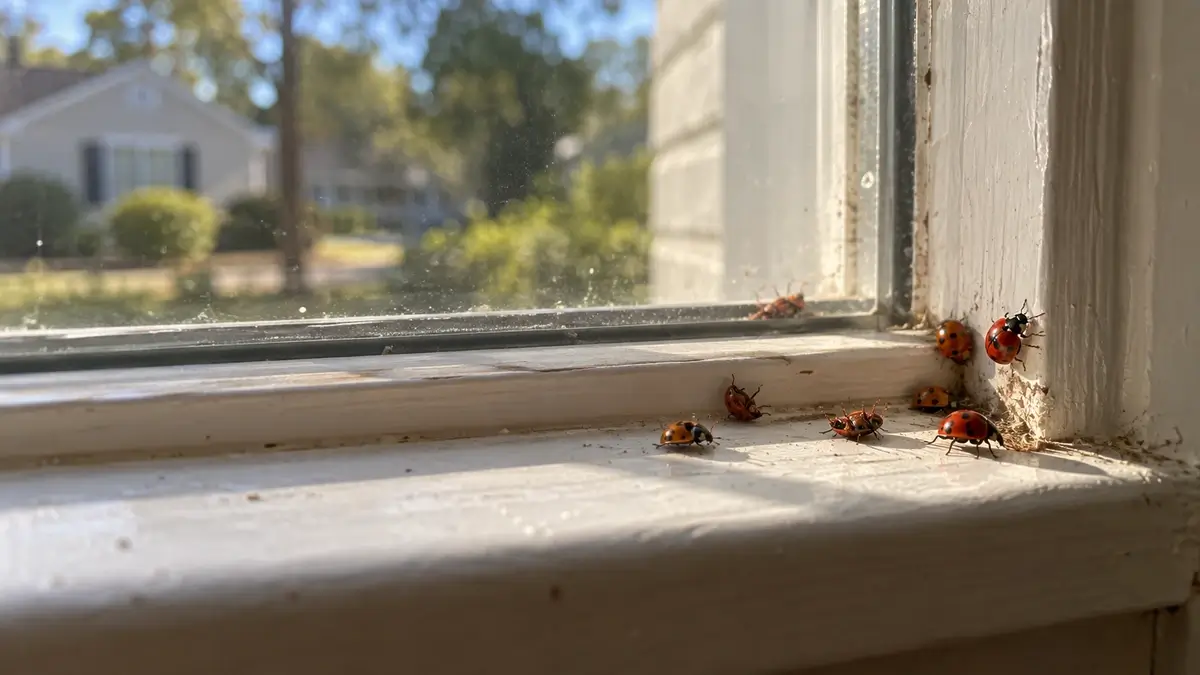
Work through the rooms drawing the most beetles first, usually those with large, sunny windows. Clean any yellow staining promptly with mild soap and water before it sets. For the complete room-by-room method, see our step-by-step guide on how to get rid of ladybugs in your home.
The mistake to avoid: reaching for a bug bomb. It feels decisive, but it does nothing to the dormant beetles inside your walls.
The most effective ladybug control happens before the swarm arrives. Seal your home in late September through early October, ahead of the first cold snap, not after beetles have already clustered. Sealing after they move in only traps them inside, where they die in wall voids and stain interior surfaces.
Georgia’s housing stock has predictable weak points, and the right materials matter as much as the timing.
A timed exterior perimeter treatment reinforces the seal. To work, it has to go on the exact walls beetles are landing on, applied in the sunny days right around the first cold snap.
Ryan I. Adams, Quality Assurance Technical Field Trainer, explains: “The best time to prevent lady beetles is before the first cold snap, not after they begin gathering. Homeowners are often surprised that the smallest gaps around siding, soffits, and windows can give hundreds of beetles a way inside.”
The rule to remember: seal before the beetles arrive, and put the treatment where the sun hits.
Call a professional when beetles return after every warm spell, when clusters settle into your attic or wall voids, when you see staining on interior walls, or when the same wall face gets swarmed year after year. These patterns signal an entry problem that vacuuming alone will never resolve.
A professional lady beetle visit includes an exterior inspection, entry point mapping, a perimeter treatment timed to the swarming days, and attic or void treatment where needed. Bug House Pest Control serves Augusta, Milledgeville, Greensboro, and Dublin, and fall exclusion scheduling fills quickly ahead of the October peak. Explore our Georgia pest control services or schedule a free estimate to get ahead of the season.
For additional identification detail, the University of Georgia Extension offers reliable regional entomology resources.
Ladybugs eat nothing indoors. The beetles inside your home are in a dormant overwintering state, not a feeding state, so they do not touch food, fabric, or wood. Outdoors they feed on aphids, scale, and mites. Because there is no indoor food source, control depends on exclusion rather than baiting.
A cold snap followed by a mild, sunny afternoon triggers Asian lady beetles to cluster on warm, south and west facing walls and push indoors to overwinter. This happens most in October and November across Georgia, then again during warm spells in February and March when dormant beetles wake inside wall voids.
Ladybugs are not venomous and do not carry disease. They can deliver a harmless pinch but do not meaningfully bite. Pets that mouth a cluster may get temporary mouth irritation, which usually clears on its own. The bigger nuisance is the yellow staining fluid they release when disturbed.
The black M or W shaped marking on the whitish area behind the head is the most reliable identifier: Asian lady beetles have it, most other lady beetles do not. Asian lady beetles also range from pale orange to deep red, cluster indoors in large numbers, and release an odorous yellow fluid, while other lady beetles rarely enter homes in numbers.
Overwintering Asian lady beetles settle into wall voids, attics, soffits, and gaps around windows and fascia, where they stay dormant through the cold. They do not die off automatically. A warm winter afternoon can rouse them, sending them toward interior light and back onto your windowsills.
Ladybugs do not damage your home’s structure. They do not chew wood, wiring, or insulation and do not feed indoors. The only real harm is cosmetic: the yellow fluid from reflex bleeding can stain light walls, curtains, and carpet, and heavy clusters leave a musty odor until they are removed.
Ladybugs, and the Asian lady beetles most Georgia homeowners actually see, are harmless to your health and your house, but they turn into a genuine nuisance when they cluster indoors by the hundreds. They do not feed inside, so the fix is never about cleanup or bait. It is about sealing the gaps they use and treating the walls they land on.
Your next step depends on where you are in the cycle. If beetles are inside now, vacuum gently and empty outside. If you want to stop next year’s wave, seal before the first cold snap and consider a timed perimeter treatment. If the same walls get swarmed every fall in your Augusta, Milledgeville, Greensboro, or Dublin home, schedule a free estimate with Bug House Pest Control before the October rush begins.
November 12, 2026
August 13, 2026
December 31, 2025
December 17, 2025