Reviewed for accuracy by Cory Goeltzenleuchter, B.C.E., P.H.E., CP-FS, Director of Technical Services
Quick answer: To clear ladybugs from your house, vacuum active clusters using a nylon stocking fitted over the hose wand, empty the canister outside immediately, and clean any stained surfaces with mild soap and water. Then seal the entry points they used to get in. Finally, schedule an exterior perimeter treatment timed to Georgia’s fall staging window so the cycle doesn’t start again next season.
Asian lady beetles show up in Georgia homes by the hundreds every fall and again during late-winter warm spells. They squeeze through gaps no wider than a business card, settle into wall voids and attics, and push back toward interior light on warmer days. Getting them out and keeping them out follows a predictable three-step sequence. This guide covers what works, what doesn’t, and why the same homes get hit year after year.
Vacuum removes the beetles currently inside your home without triggering the defensive odor that comes from crushing them. Sealing closes the gaps they used to get in, which cuts off the daily trickle of new arrivals. Treating the exterior before fall staging begins addresses the population before it ever reaches your living space.

Skipping a step almost always means the problem returns within weeks. Vacuuming without sealing buys temporary relief. Sealing without treating leaves a staging population right outside, waiting for the next small gap to appear.
Not every red or orange beetle is the same kind of ladybug. The Asian lady beetle, the species behind most Georgia infestations, has a distinctive black M-shaped marking on a whitish area behind the head. This matters because Asian lady beetles aggregate indoors in large numbers and release a yellowish, foul-smelling defensive fluid when disturbed or crushed.
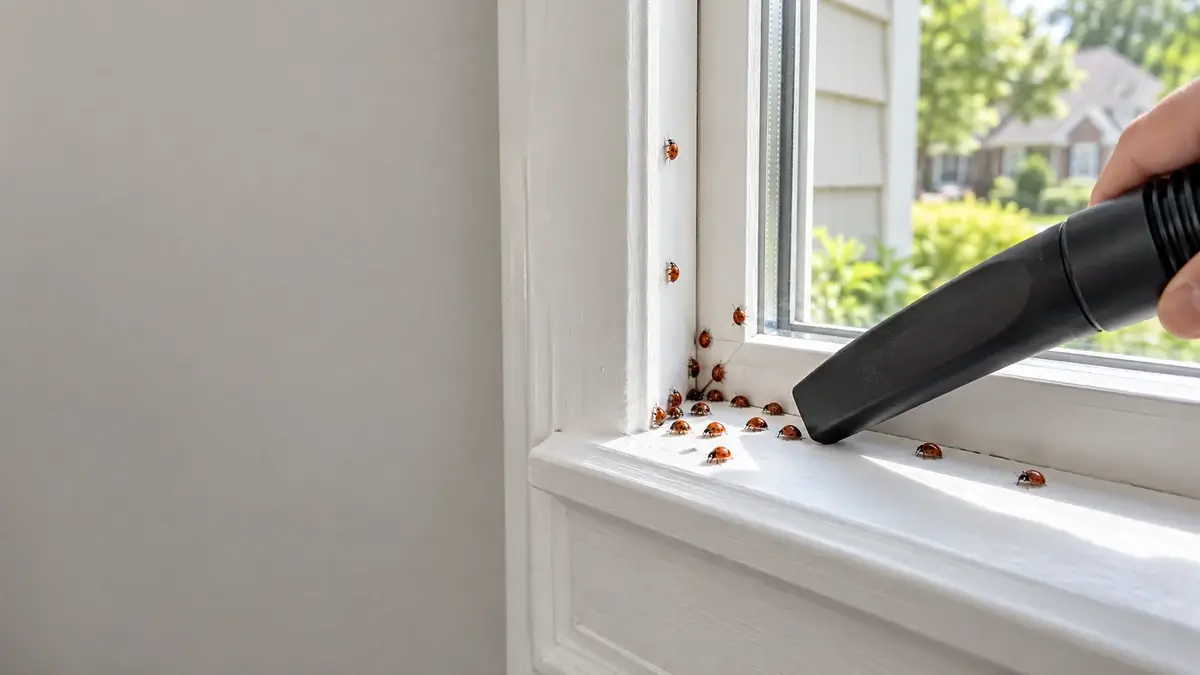
Use a vacuum with a hose attachment to collect beetles from windows, ceilings, and corners. Crushing them stains fabric and painted surfaces and releases the odor that can draw more beetles to the same spot. A vacuum removes them cleanly and in volume.
Secure a section of nylon stocking over the end of the hose wand with a rubber band and let it billow inside the tube. Beetles are pulled in by suction but collect in the stocking rather than the canister. When you’re done, remove the stocking, tie it off, and dispose of it outdoors.
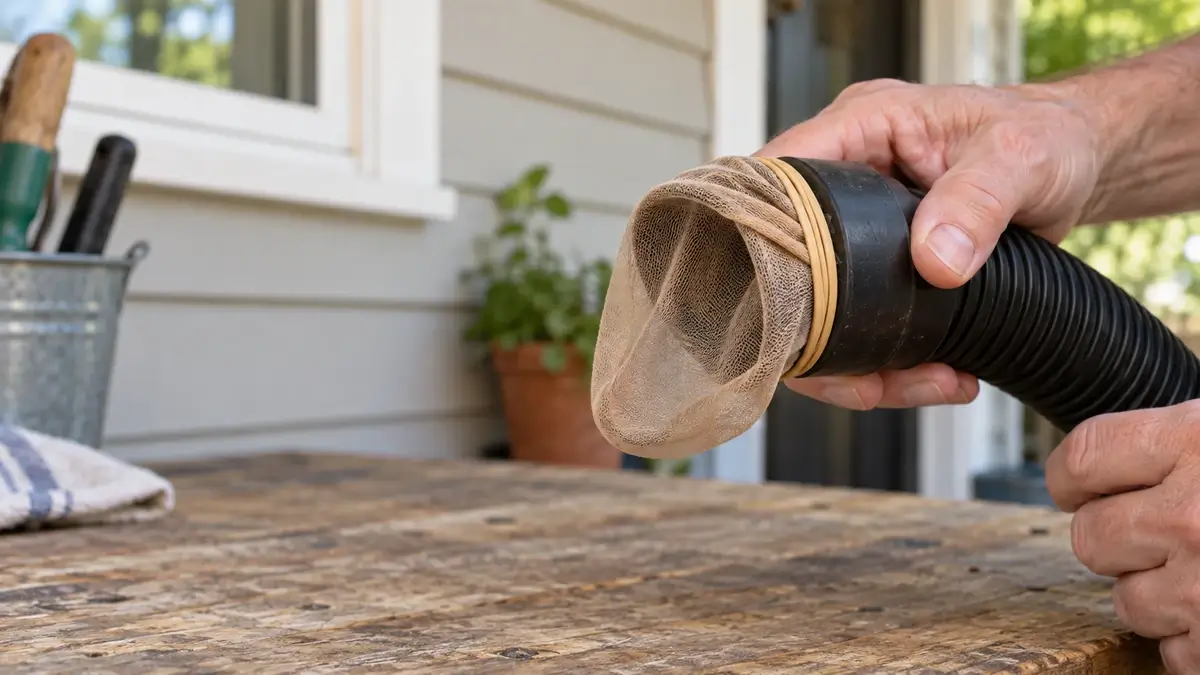
Whether you used the stocking method or not, don’t leave vacuumed beetles sitting in the canister. Empty it well away from the foundation so beetles can’t simply find their way back to the exterior wall.
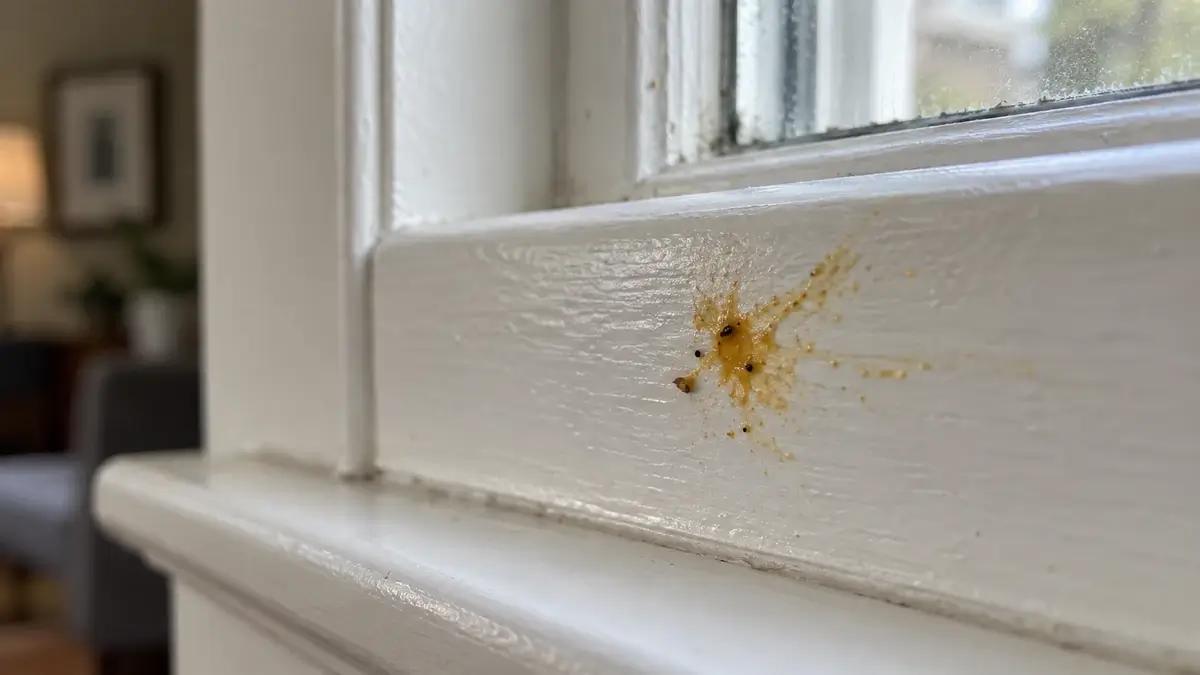
The defensive fluid ladybugs release leaves yellow stains on curtains, walls, and window sills. Clean these areas as soon as you spot them. The longer the fluid sits, the harder it is to remove.
Ladybugs are drawn to warmth and light. Window sills, recessed fixtures, and attic hatches are consistent gathering spots. Check these areas daily during peak season and vacuum as needed.
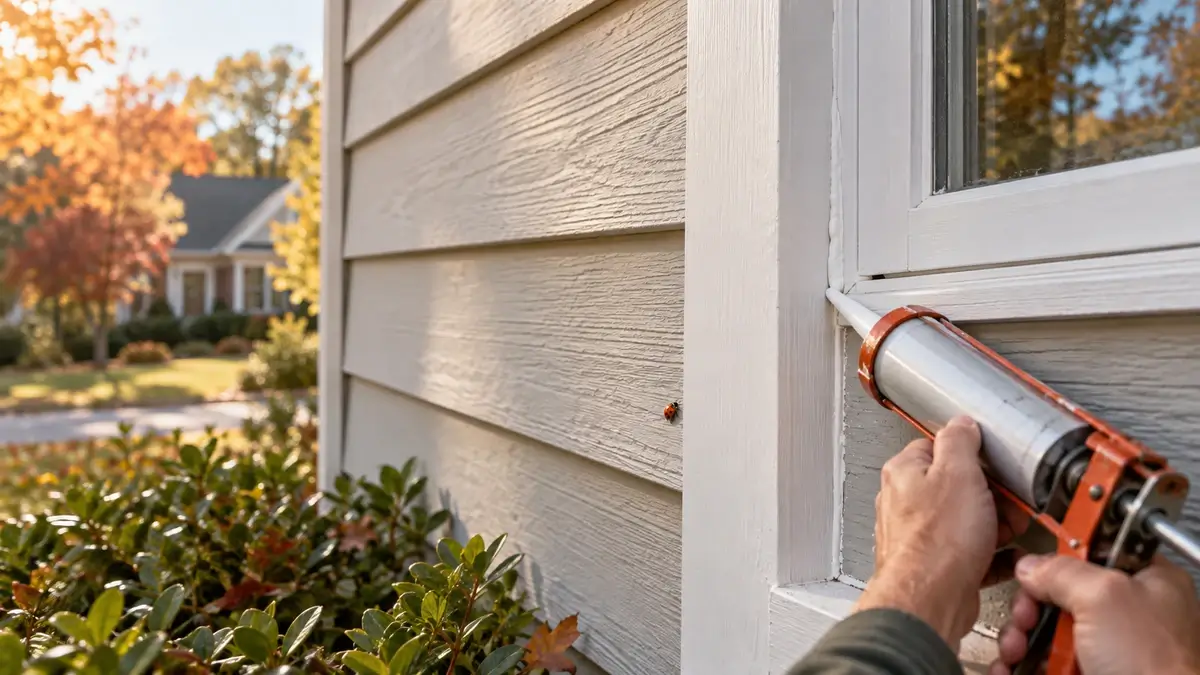
Once the active indoor population is under control, shift your attention to the exterior. Exclusion, physically blocking the entry points, is the step that determines whether this becomes a permanent fix or an annual cleanup.
Most home-remedy lists online recommend everything at once and don’t say which methods actually hold up. Here’s an honest breakdown.
| Method | Does It Work? | Why |
|---|---|---|
| Vacuuming with a hose attachment | Yes | Removes beetles without crushing them or releasing defensive odor |
| Sealing cracks and gaps with exterior caulk | Yes | Directly blocks the entry points beetles use to get inside |
| Window screen repair and installation | Yes | Prevents entry through one of the most common access points |
| Exterior perimeter treatment before fall staging | Yes | Targets beetles before they cluster and push indoors |
| Dish soap spray | No | Kills on contact in small numbers but doesn’t address the source or prevent re-entry |
| Vinegar spray | Limited | May mask pheromone trails on hard surfaces temporarily but has no lasting effect and won’t stop an active infestation |
| Indoor foggers or bug bombs | No | Does not reach beetles dormant in wall voids and poses unnecessary indoor air quality risks |
| Citronella candles | No | Not shown to repel Asian lady beetles and provides no exclusion benefit |
| Scent-based deterrents (citrus, clove, menthol) | Limited | May shift beetle activity a few feet in enclosed spaces; will not clear an established cluster |
Choose sealing and exterior treatment for any recurring problem. Vacuuming alone is only appropriate for a first, light encounter, and only if you’re planning to follow up with exclusion work before the next fall season.
Homeowners assume a cleanup will solve the problem for good. Two biological factors tend to prove that assumption wrong.
First, Asian lady beetles entering wall voids in fall don’t always die. Many go dormant inside insulation and framing cavities and stay put through the winter. A warm spell, even in January or February, can rouse them. When they become active, they move toward the nearest light source, which is often a window inside your home.
Second, Asian lady beetles release an aggregation pheromone once they find a suitable overwintering site. This scent signals to other beetles that the location is safe, which is why a single crack that admitted a handful of beetles one year can draw dozens more the next. The pheromone tends to persist on surfaces even after cleaning, which explains why the same wall faces and rooms get hit repeatedly.
“The houses I see every fall almost always have the same problem: a south- or west-facing wall with a gap behind the siding that was never sealed. The beetles find it the first year and come back to the same spot every season after that. Once we seal it properly and time the exterior treatment right, the calls stop.” Ryan I. Adams, Quality Assurance Technical Field Trainer, Bug House Pest Control explains.
Prevention is a timing problem as much as a method problem. Sealing after beetles have already clustered on your siding means many are already inside the wall void before any caulk goes down.
For a broader look at which insects follow the same seasonal pattern, see our guide to fall pests that overwinter in Georgia homes.
Georgia’s climate creates two windows of Asian lady beetle activity each year. The primary wave runs from mid-October into early November as overnight temperatures begin to fall across middle and east Georgia. A second, smaller wave appears in late winter when a warm stretch wakes dormant beetles from wall voids and attics.
Each Bug House service area sees this pattern a little differently:
Augusta older brick homes often have weathered mortar joints and unscreened weep holes, both of which are common entry points that get overlooked until the beetles are already indoors.
Milledgeville and Dublin homes frequently have vented crawl spaces and older wood trim with separated joints, which create multiple low-level access points at the foundation.
Greensboro and the lake corridor properties tend to see earlier and heavier clustering. Large south-facing glass, warm afternoon wall faces, and wooded lots create ideal staging conditions, and seasonal occupancy on lake homes can mean an infestation goes undetected for weeks.
In all four service areas, the action window is before the first cold snap, not after. By the time you see beetles clustered on the siding, the staging period has already begun.
A few ladybugs on a window sill is a manageable DIY situation. A recurring annual swarm is a structural entry problem that needs professional attention.
Call Bug House if:
Bug House Pest Control provides ladybug inspections and exterior treatments for homes throughout Augusta, Milledgeville, Greensboro, and Dublin. Our technicians locate the specific entry points driving an infestation, recommend the exclusion work that stops repeat access, and apply exterior treatments timed to Georgia’s fall staging period. Learn more about our Georgia pest control services or get a free estimate before fall staging begins.
For a deeper look at Asian lady beetle biology and why certain homes attract them, visit our full guide on ladybugs and your home. For species identification support, the University of Georgia Extension provides reliable entomological resources for Georgia homeowners.
Vacuuming is the most effective natural removal method. Fit a nylon stocking over the end of the hose wand to collect beetles without sending them into the canister. Empty the vacuum outside immediately and clean any yellow-stained surfaces with mild soap and water. Follow up with exclusion work to prevent re-entry.
Asian lady beetles release an aggregation pheromone when they find a suitable overwintering site, which signals other beetles to return to the same location season after season. Dormant beetles already inside wall voids also become active again during warm winter spells, pushing toward interior light. Exclusion is the only reliable way to break the cycle.
Dish soap and water kills ladybugs on contact in small numbers but doesn’t address the source of the infestation or block re-entry. Vinegar may temporarily mask pheromone trails on hard surfaces but has no lasting effect on an active infestation. Neither replaces exclusion.
Citrus, clove, and menthol-based scents may discourage landing on a treated surface in a confined space, but there is no reliable evidence any of them clear an established indoor cluster. Scent-based deterrents are a supplement at best, not a fix.
Inspect window screens for tears or gaps and repair or replace damaged sections. Caulk any cracks in the window frame or surrounding trim, and cover weep holes with small mesh screens. Do this in late September, before beetles begin actively seeking entry points.
Yes, if beetles are returning daily despite vacuuming, appearing in more than one room, clustering on exterior siding in late summer, or coming back to the same rooms every season. A professional inspection identifies every entry point and applies a timed exterior treatment, which addresses the problem at its source rather than managing symptoms season after season.
Ladybugs in your home are rarely a one-time event. The same entry points and pheromone trails bring beetles back every fall and again in late winter. Vacuuming addresses what’s already inside. Sealing and timed exterior treatment are what actually break the cycle. If you’re in Augusta, Milledgeville, Greensboro, or Dublin and ready to stop repeating the same cleanup, get a free estimate from Bug House Pest Control before the next fall staging season begins.
August 13, 2026
December 31, 2025
December 17, 2025
December 3, 2025