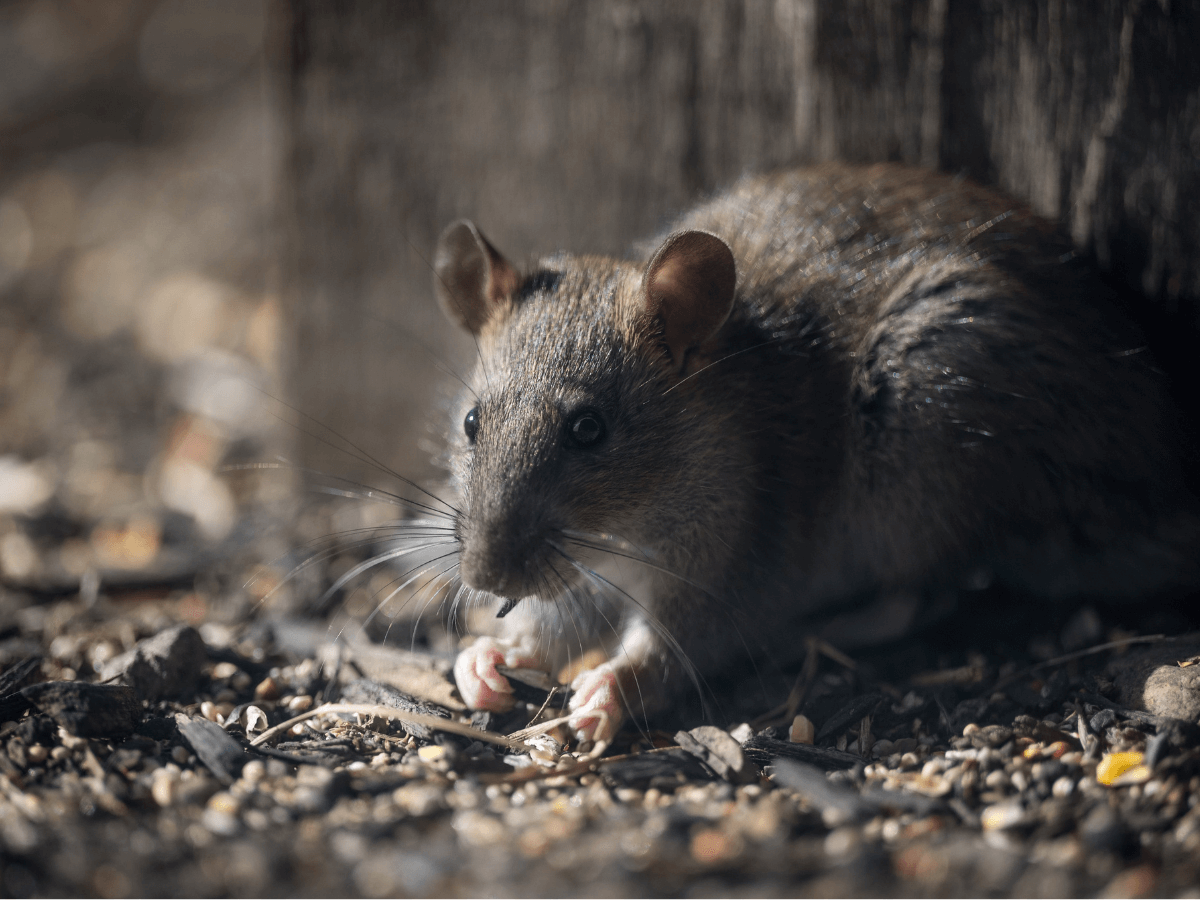
Quick answer: As November arrives in Georgia, rats and mice start looking for warm, sheltered places with food nearby. The rodents in Georgia most likely to move indoors are house mice and two kinds of Georgia rats: roof rats and Norway rats. Rats in Georgia and house mice can slip through small gaps around pipes, vents, doors and foundations. The best first steps are to seal those gaps, remove easy food and shelter, and act at the first sign of droppings or gnaw marks.
UGA Extension says rats and mice can fit through openings as small as a dime. The CDC says mice can fit through a hole about one-quarter inch wide, roughly the width of a pencil. That means a gap you barely notice can still let a rodent inside.
This guide covers why rodents move indoors this time of year, how to tell which ones you may be dealing with, the signs to watch for, how to clean up safely, and when it makes sense to call for help.
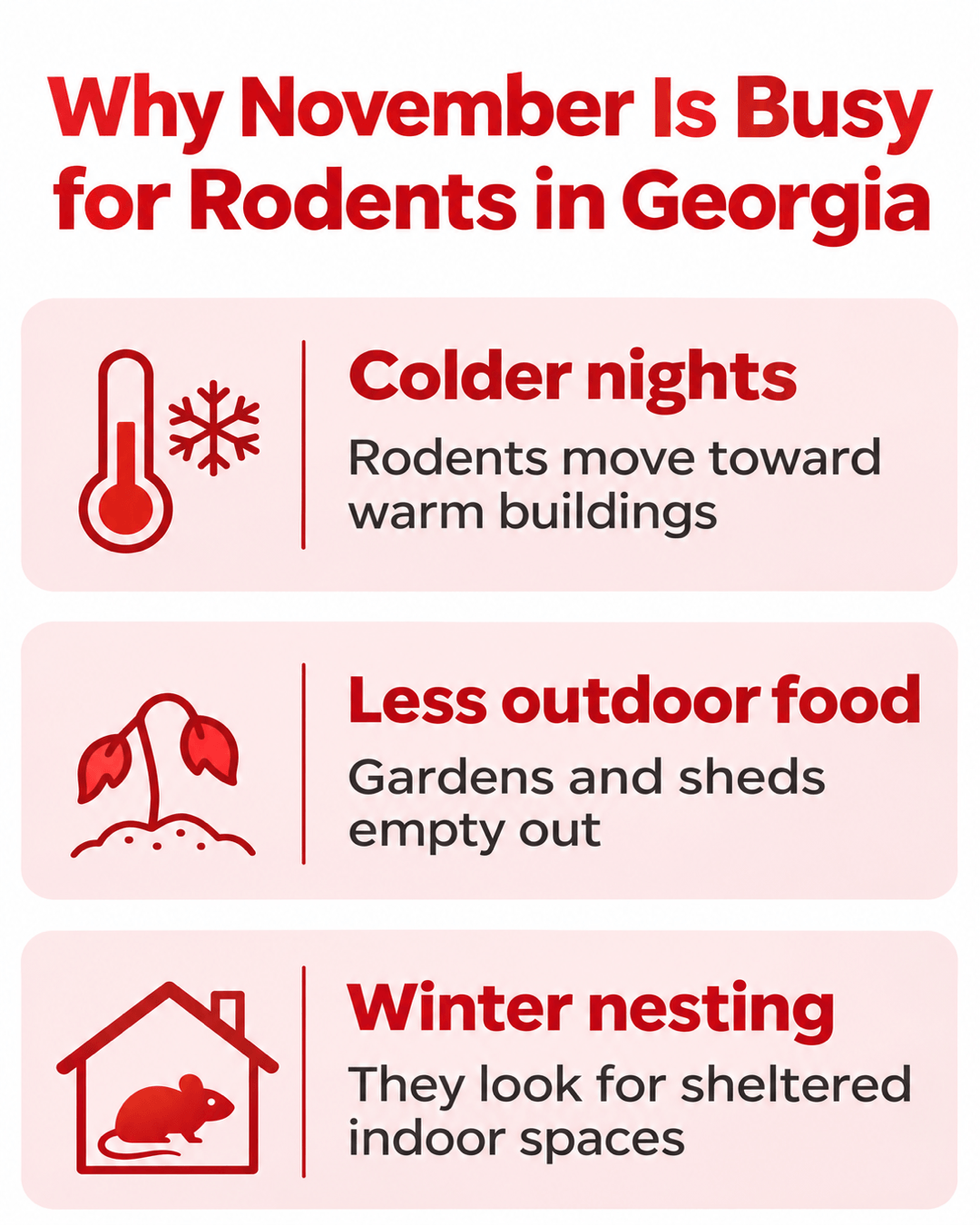
Rodents can enter buildings at any time of year, but cooler nights make warm, sheltered spaces more appealing. An attic, garage, crawl space or wall void may offer protection from the weather, along with access to food and nesting material. A small gap that went unnoticed in summer can become an entry point once rats and mice start exploring sheltered places.
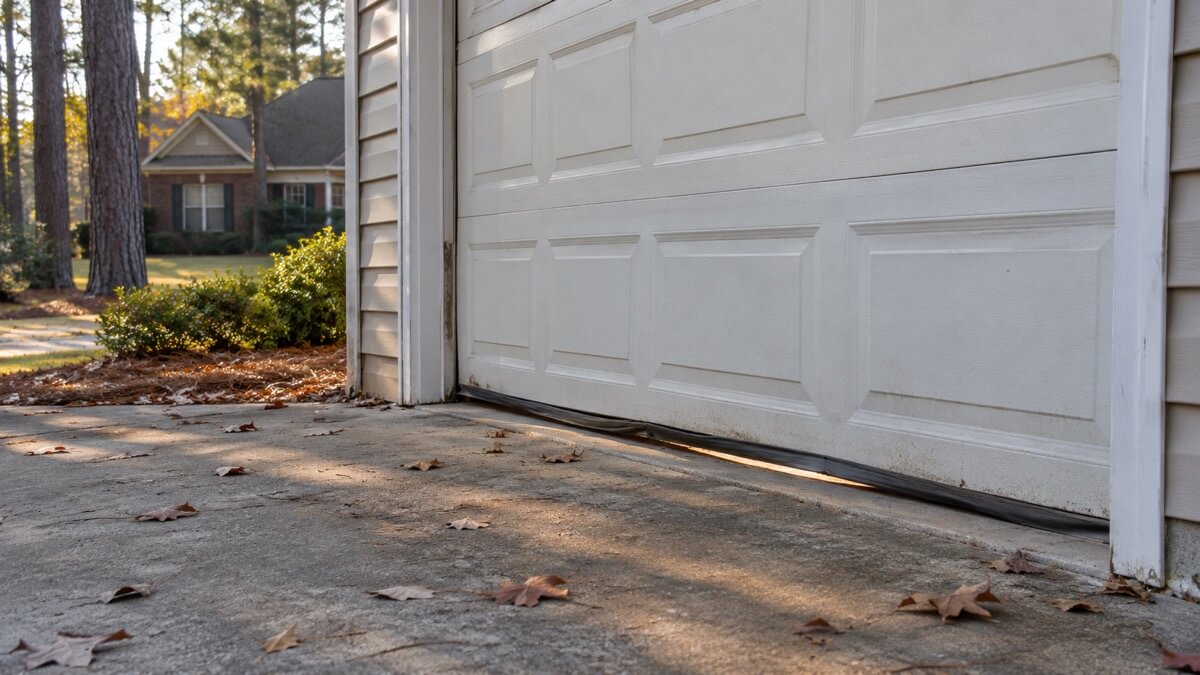
As temperatures drop, rodents look for spaces that stay dry and protected. Cooler nights are a good reminder to check your roofline, foundation, garage doors, vents and utility openings before rodents find them first.
Outdoor food sources can become less dependable in cooler months. That makes pet food, open garbage, stored feed and spilled birdseed near a home more attractive. Clutter around the house can also give rodents cover as they move closer.
Rodents in your home do not mean your home is unclean. Rats and mice can enter well-kept homes through small openings. Removing easy food sources and closing entry points simply makes a home less inviting.
UGA Extension identifies three species that live alongside people in Georgia: the house mouse, the roof rat and the Norway rat. Size and appearance can help you tell them apart. Still, you do not need to identify a rodent before taking basic steps to protect your home.
House mice have bodies about three inches long, not counting the tail. They often hide behind appliances, inside cabinets and in garages. UGA Extension notes that house mice can breed at roughly 30-day intervals, which is why a small problem can grow quickly. Address the first signs early.
Roof rats are sleek, agile climbers, often brown or black, with ears that extend past their eyes when folded forward. Because they climb well, check eaves, rooflines and attic vents for possible access points.
Norway rats, also called brown rats, are larger and heavier-bodied than roof rats. They are often brown or reddish-gray, and their ears do not extend past their eyes. Please do not handle a live or dead rodent to identify it.
Georgia rats and mice need very little space to get inside. They often enter through gaps around pipes, wires, doors, windows, vents, eaves and foundations. Inspect both the inside and outside of your home, paying close attention to:
For small holes, the CDC recommends filling them with steel wool and sealing with caulk or spray foam. Larger openings may need hardware cloth, cement or metal sheeting. Do not block vents your home needs for airflow.
Crawl spaces deserve a careful look, since they are sheltered and rarely visited. If your crawl space has ongoing access or moisture concerns, ask whether a closed crawl system is a good fit for your home.
You may never see a mouse or rat, especially since many are most active at night. Instead, look for what they leave behind:
These signs show you where to look. They may not reveal the entry point or how widespread the activity is.
Scratching or movement inside a wall can point to rodent activity, but sound alone cannot confirm which animal is present. Note when and where you hear it, and look for droppings or gnaw marks nearby. Avoid opening a wall without knowing what is inside. An inspection can help narrow down the source.
Noises overhead may come from rats, mice or other wildlife. Check for droppings, nesting material and damage, but do not enter an unsafe attic or try to disturb an animal. If you suspect a larger animal rather than a rodent, learn more about wildlife removal.
If you are noticing droppings or hearing scratching, you are welcome to contact Bug House to talk through what you have seen. Our team can explain how rodent control in Georgia works, from identifying activity to finding likely access points.
Rats and mice affect both the health of your household and the condition of your home. Knowing the risks helps you decide how quickly to act.
Rodents can contaminate food and surfaces with their urine and droppings, and they may carry germs and parasites. Keep children and pets away from droppings, nests and dead rodents, and follow the safe cleanup steps below.
Rodents gnaw constantly. They chew through packaging and building materials and can damage insulation and wiring. If any wiring looks chewed or damaged, have it checked by a qualified professional.
UGA Extension recommends traps rather than poison bait inside the home. Poisoned rodents may die in walls or other hard-to-reach spaces and cause odors. Both bait and traps can pose risks to children and pets, so keep them out of reach and follow product directions carefully. UGA Extension does not recommend glue boards.
Home remedies are not a reliable fix. Find out more in our post on natural mouse repellents. If you are dealing with more than a few mice, a pest professional can recommend next steps.
To protect your Georgia home this November, start with a few simple habits:
These steps make your home far less inviting. For more detail, see our guide on how to keep rodents out of your Georgia home and our landscape tips to keep rodents away.
Do not sweep or vacuum rodent droppings, urine or nesting material. The CDC warns that doing so can put contaminated particles into the air. For a small cleanup:
If you find a heavy buildup of droppings, nests or dead rodents, do not treat it as a routine household cleanup. The CDC recommends extra precautions for heavily infested buildings, so consider getting professional guidance.
Consider professional help if you keep finding droppings, hear activity after sealing obvious gaps, or suspect rodents in your walls, attic or crawl space. A pest professional can inspect for activity and access points, then recommend next steps based on what they find. If the issue may involve wildlife, ask which service is the right fit before any work begins.
Learn more about rodent control in Georgia or find your local Bug House office to request a free quote. A Service Professional can talk through the signs you have noticed and the areas that concern you most.
Seal gaps around pipes, vents, doors and the foundation. Use steel wool with caulk or spray foam for small holes, and hardware cloth or metal for larger ones. Store food and garbage in tight-lidded containers, and keep woodpiles and clutter away from the house.
The CDC says mice can fit through a hole about one-quarter inch wide, roughly the width of a pencil. UGA Extension says rats and mice can get through openings as small as a dime.
Cooler weather can make sheltered homes, garages and attics more appealing places to find cover, food and nesting material.
Look for droppings, gnaw marks, shredded nesting material, chewed food packaging, stale or musky odors, and scratching sounds in walls or ceilings.
No. The CDC advises against sweeping or vacuuming because contaminated particles can become airborne. Wear gloves, wet the droppings with disinfectant or a bleach solution, let them soak for five minutes, then wipe them up with paper towels.
If signs continue after you seal gaps, or you suspect rodents in an attic, wall or crawl space, a professional inspection can help identify activity and entry points.
Prefer to talk? Call Bug House at 866-696-2001.
Author: Anna Vaccaro, Editorial Lead – Pest Education
Reviewed by: Cory Goeltzenleuchter, B.C.E., P.H.E., CP-FS
Cory Goeltzenleuchter is the Director of Technical Services supporting Bug House Pest Control. As a Board Certified Entomologist and Public Health Entomologist, he oversees technical training, service standards, and industry best practices that help Bug House teams deliver science-based service to homeowners across Georgia.
August 13, 2026
December 31, 2025
December 17, 2025
December 3, 2025